
A checklist of San Diego’s classic LGBTQ bars and restaurants
June is Pride Month in San Diego. In celebration, here is a selected list of classic LGBTQ bars and restaurants from San Diego over the years. This is a work in progress, so tell us about your favorites in the comments below, and the ones we have to include!
Restaurants with checkmarks are still in business today [2025].

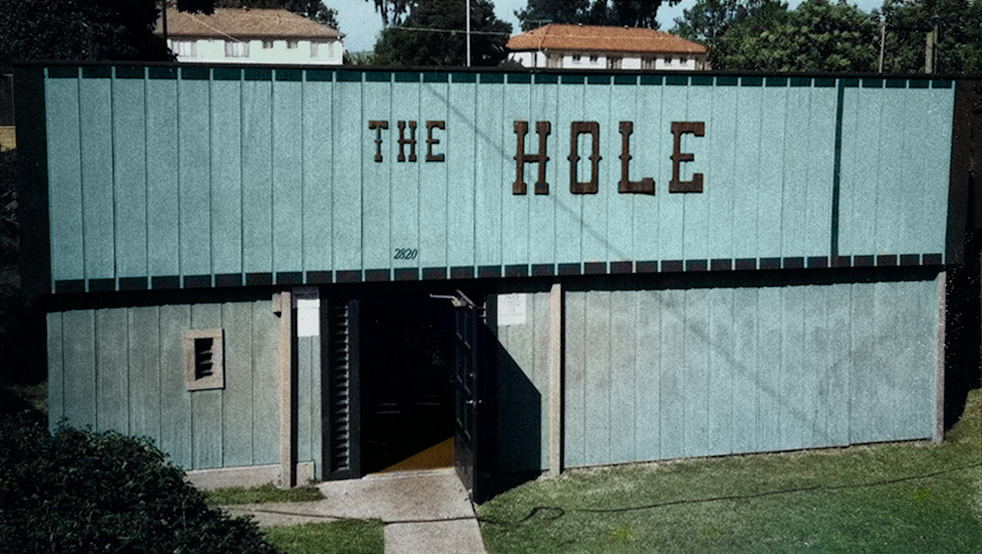 (1924-✔) The Hole in the Wall is San Diego’s oldest gay bar. A staple of San Diego’s LGBTQ+ community for decades, The Hole reportedly opened as a speakeasy in 1924 across Lytton Street from the six-hole Sail Ho golf course at the Naval Training Station (now, Liberty Station). Cash bar with inexpensive well drinks, pitchers of beer, pool table, karaoke, Sunday Beer Bust, and a garden patio.
Loma Portal
The Hole
2820 Lytton Street
San Diego, CA 92110
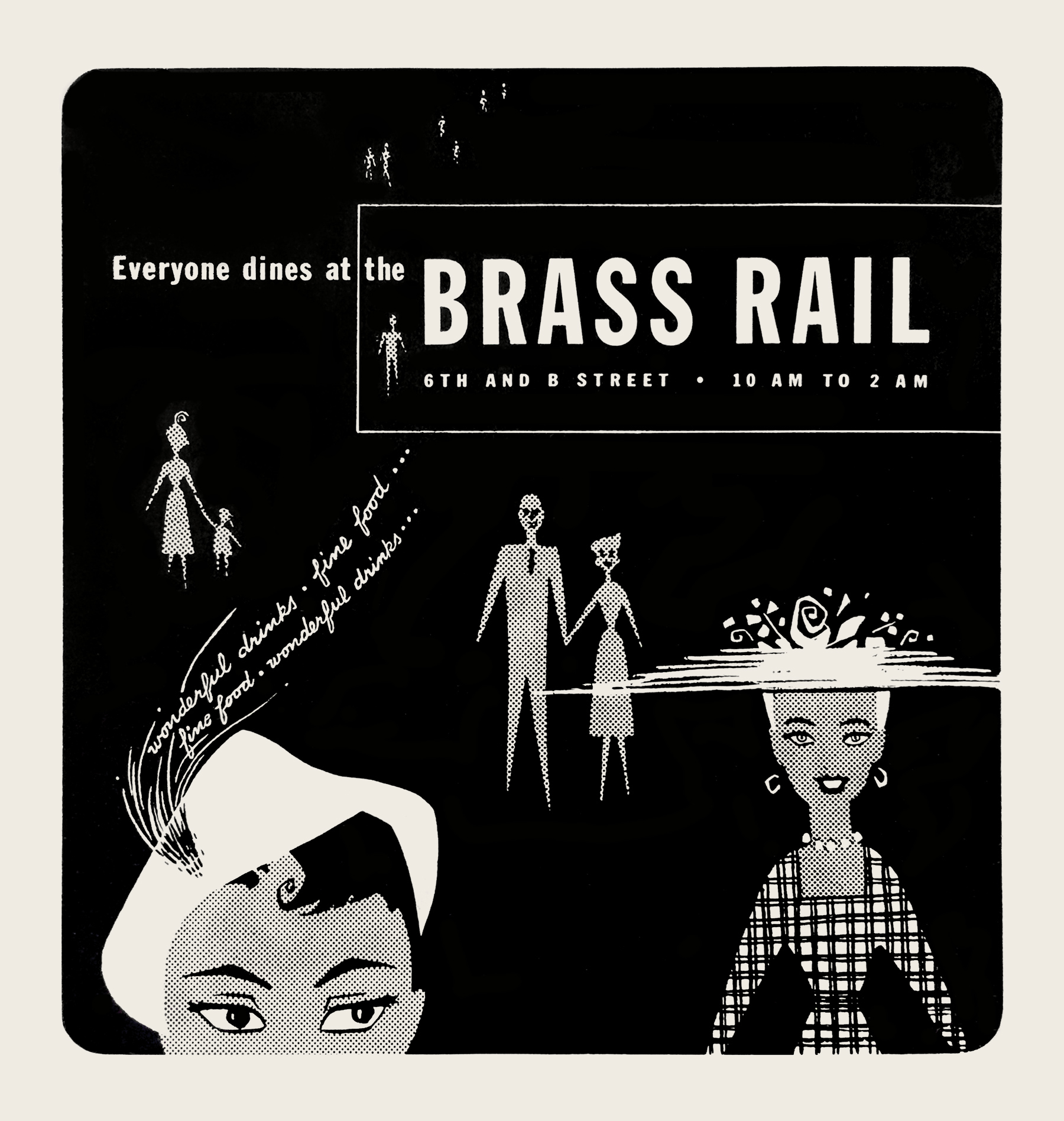 (1933-✔) The Brass Rail is the oldest continuously operating gay bar in San Diego, since 1933. During Prohibition, restaurateurs Arthur Cloninger and Dutch O’Neil ran The Tunnel and Log Cabin bars across the border in Tijuana. In May 1933, a bomb blast and fires, “said to be gangster work,” destroyed both. Cloninger and O’Neil were held by Mexican authorities while they investigated. By September, the two opened The Brass Rail bar and restaurant in the northwest corner space of the Commonwealth building (which also housed the Orpheum Theater) at 6th Avenue and B Streets. There was a window that looked into the kitchen from the sidewalk where you could watch rotisserie chickens roasting while waiting in line for the movies.
Del Thurber (Brass Rail, Park Manor Hotel) sold it to Clarence Vernon Badger, an ex-circus publicity man. Badger spent $45,000 remodeling the old place and reopened in 1952 with three separate service areas — the New Brass Rail Coffee Shop (open 24 hours – ham, eggs, toast, and coffee, 68¢), the redecorated Brass Rail Lounge (live piano, double martinis 50¢), and Club Bagdad & Grill (cocktails 35¢). “We are now ready to serve our many friends in the unique atmosphere of beautiful Club Bagdad,” said host Harry Rock. On opening night, they hired a very large bouncer and dressed him up “as a rajah;” had another riding a donkey around downtown; and tried to get “a pretty harem girl stroll around town leading a pair of tame tigers.” City officials denied the last request. But a cocktail lounge outfitted in the Arabesque by Estler, with nightly live music on the Hammond? Yes, you’re damn straight it attracted a queer audience. By 1953, it was associated with the Trocadero piano bar in the Park Manor Hotel.
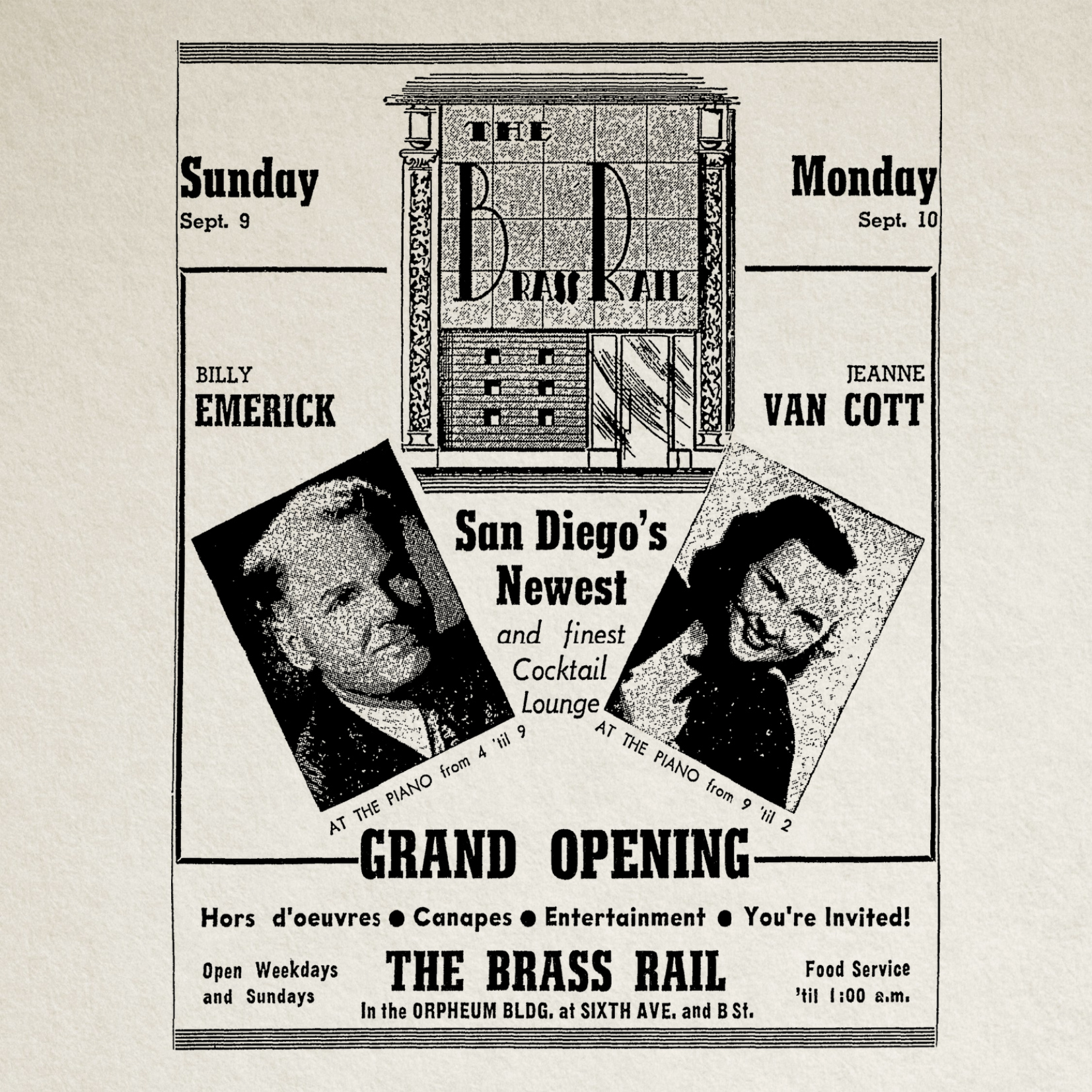
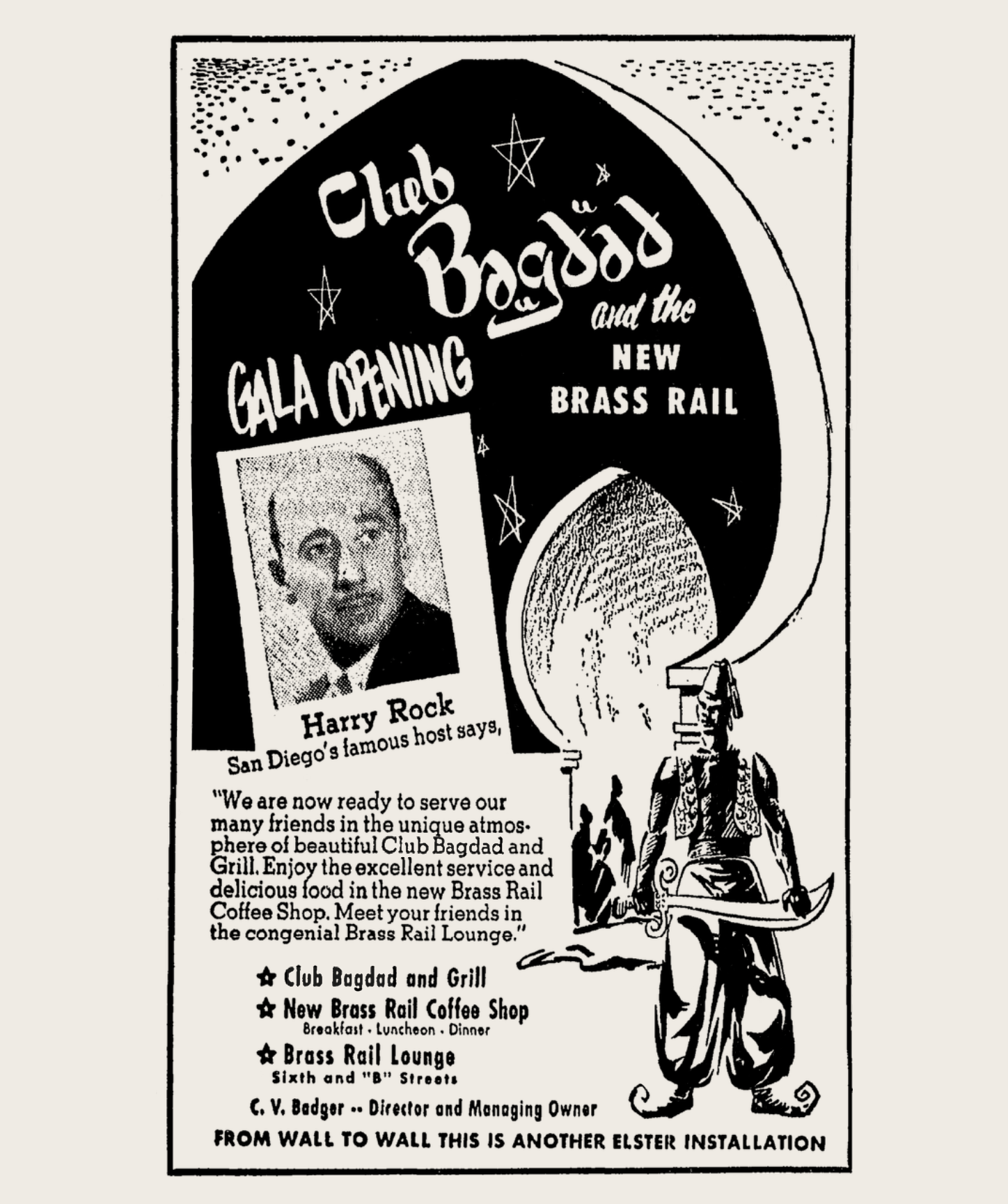
Lou Arko bought the place in 1958. He primarily catered during the day to downtown professionals, attorneys and the like. It is reported that as the evenings progressed, more men came in to socialize around the piano bar and at night, “the clientele became mostly gay men, since this was one of the only place in town where they felt comfortable.”
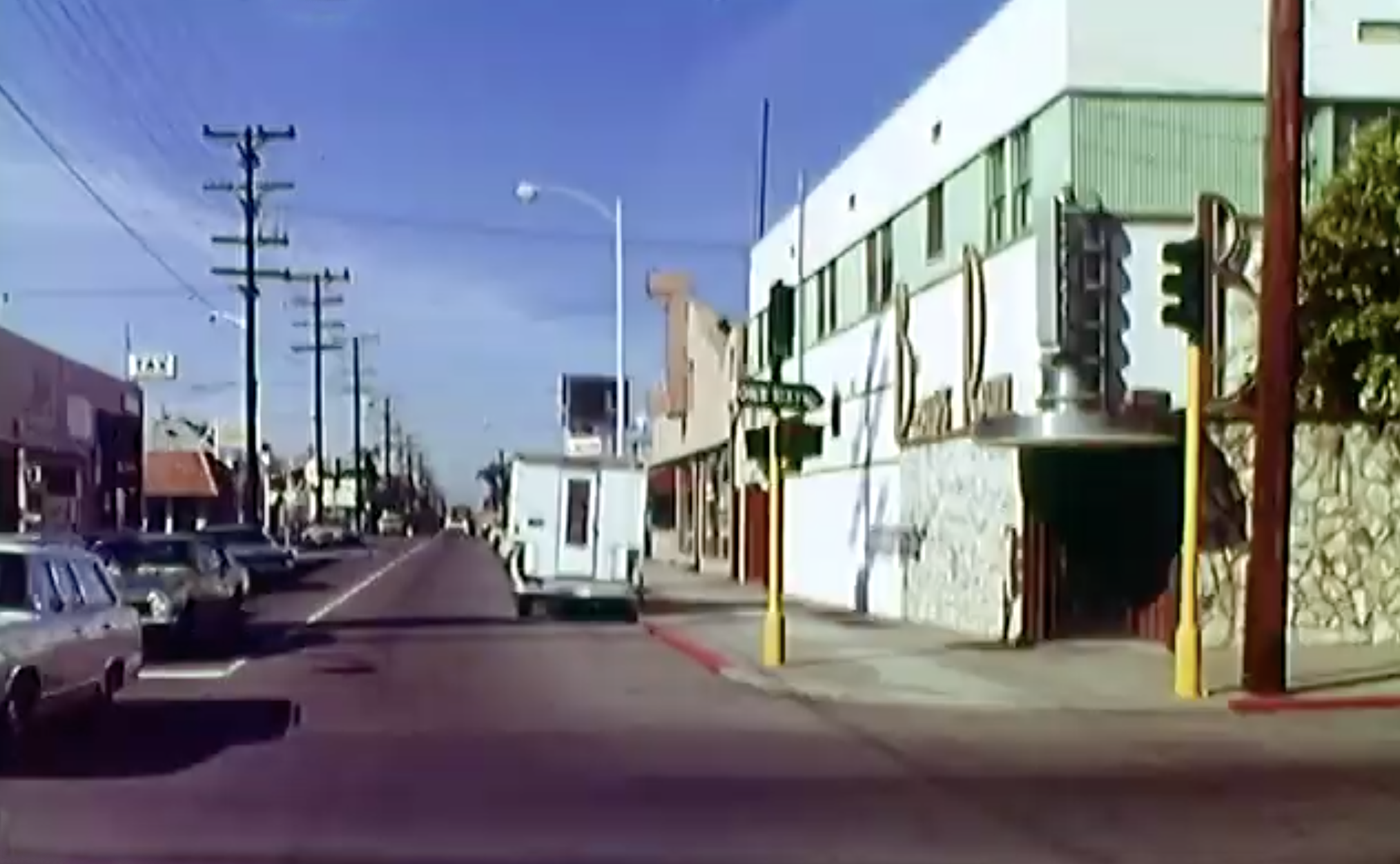 In 1963, the Orpheum and Brass Rail were to be demolished to make way for the incoming Union Bank building. So, Lou Arko moved his bar business to the northwest corner of Fifth and Robinson in Hillcrest, the site of today’s Chase Bank.
“Without even realizing it at the time,” Brass Rail bartender Big Mike Phillips recalled, “this straight man had started what is now the San Diego ‘gayborhood’ in Hillcrest.” Later, The Brass Rail moved across the street to its present location and became known as the place for San Diego’s gay community. Today it is operated by Urbano Pelicano and Isaac Vargas.
Hillcrest
3796 Fifth Avenue (1973-✔)
San Diego, CA 92103
Hillcrest
3800 Fifth Avenue (1963-1973)
San Diego, CA 92103
Downtown
Commonwealth Building
530 B Street (1933-1963)
San Diego, CA 92101
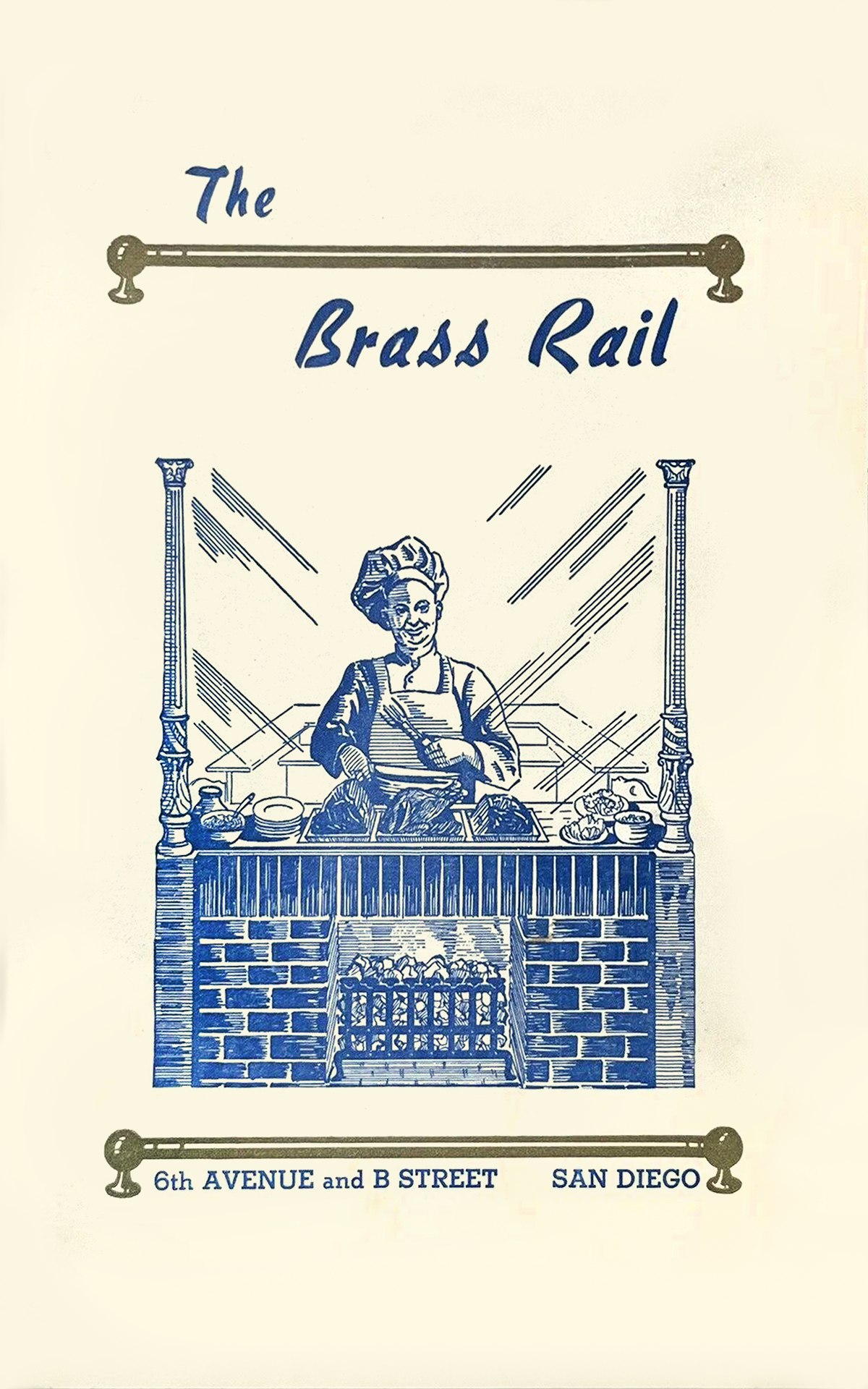
Brass Rail menu cover, 1946
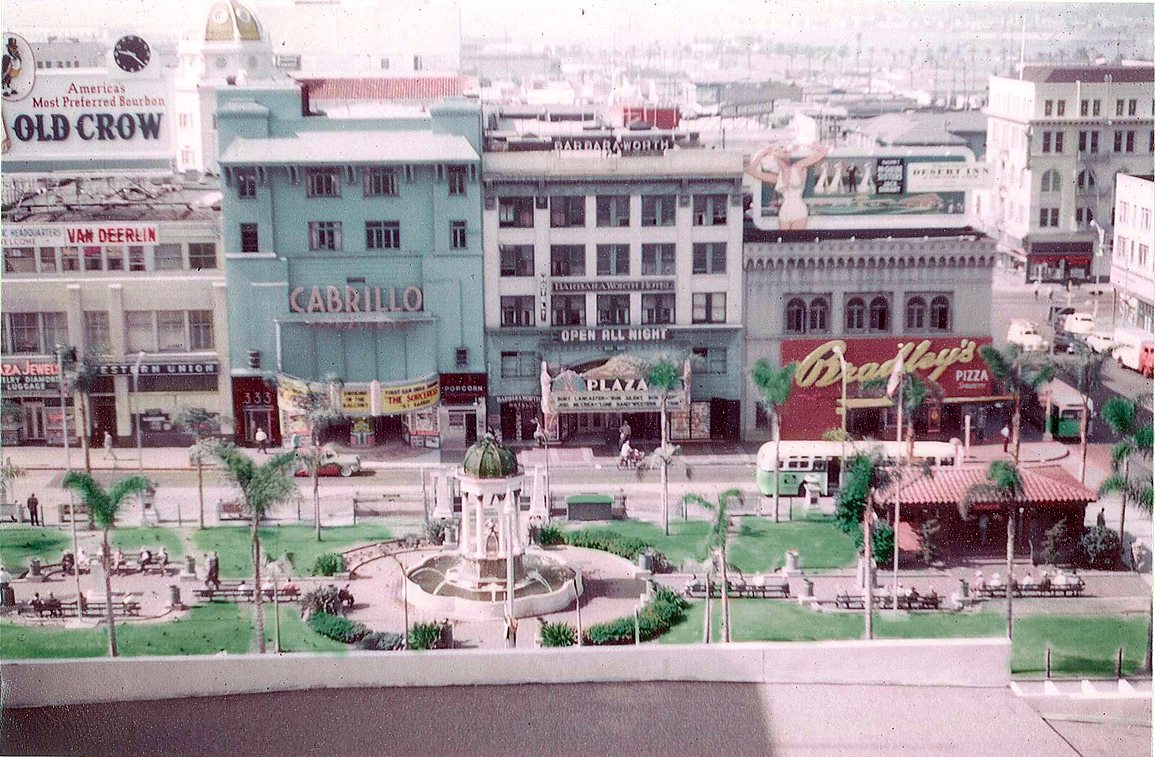 (1938-1970) Bradley’s Puka-Puka was a high-end rum bar located on the mezzanine level of Bradley’s 5 & 10 at Plaza and Third [Horton Plaza], San Diego. It replaced Art Deco-style nightclub of band leader Matt Howard. The main gimmick of Bradley’s ‘five and dime,’ other than its amusing callback to inexpensive hardware stores, was that all drinks served on premises were priced at five or ten cents each! Beers and short pours, mixed drinks, bar food.
It was recognized as a hangout for gay clientele through the 1960s, with the neighboring Circus Room, Golden Rail, and other Navy bars around Horton Plaza. Eventually, Bradley’s became a pizzeria, serving up quick pies to busy Plaza transit crowds and downtown workers. The original building was demolished, but rebuilt when Horton Plaza took over the downtown area in the 1980s. It is now known as the Bradley Building.
Horton Plaza
303 Plaza Street
San Diego, CA 92101
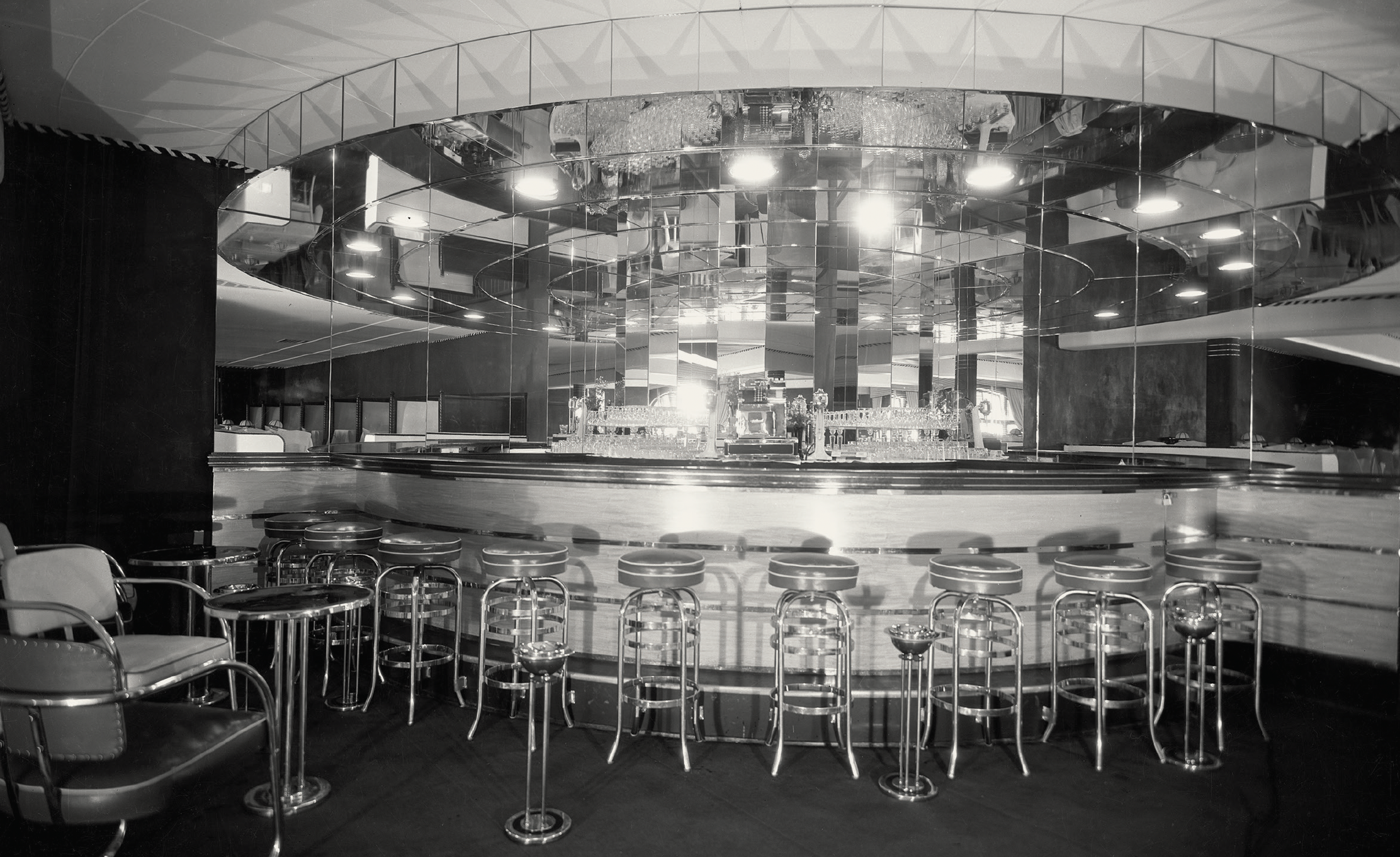
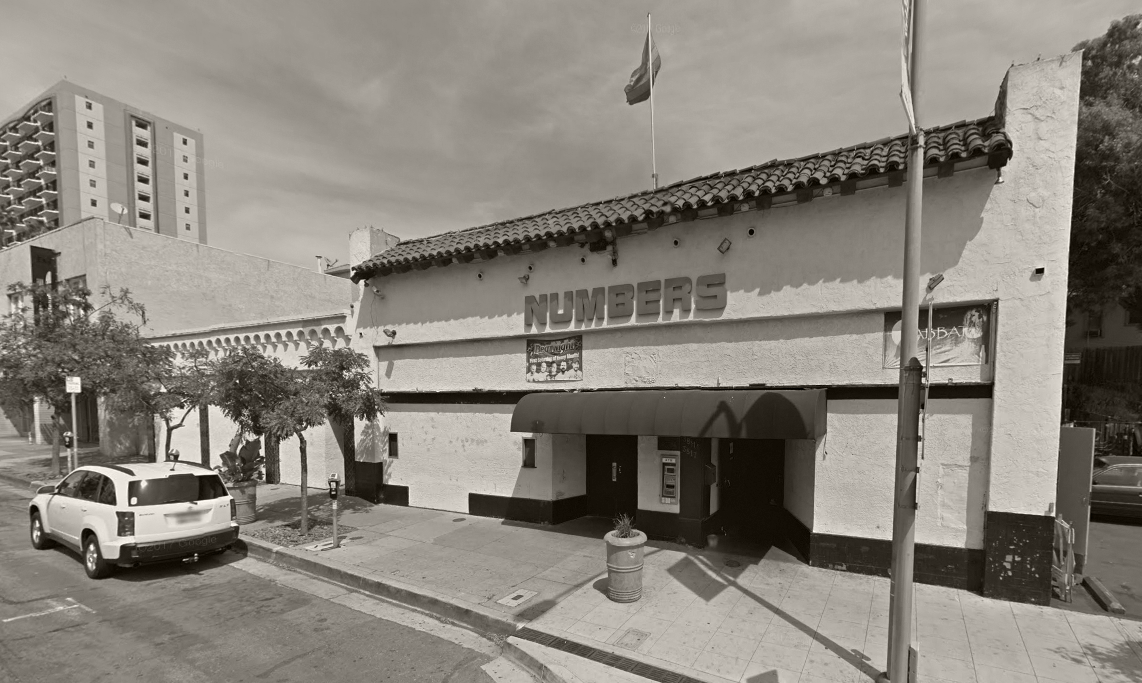 (1939-1974) Aloha Inn Cafe was a long-standing Hawaiian-themed bar and cafe located just across Park Blvd from the Egyptian Theatre. Mrs Lillian D Patty’s Hillcrest institution started out serving beer, wine and mixed drinks in an intimate Hawaiian setting, and over the years went through several ownership changes and a move to the building next door. In 1965 owner Arthur L Canfield got so fed up with San Diego’s go-go girl craze, he started up his own line of entertainment, the ‘Gone-Gone Girls,’ a dancing group whose members were 60 and older. The building went on to host Nick Moede’s Numbers gay bar and nightclub for years, who carried on the the Aloha’s tradition with go-go boys. Numbers had three bars, two dance floors, a patio, featured hip-hop Thursdays, girls night out on Fridays, and hot boys on Saturday nights…
Hillcrest
Numbers (closed 2017)
Aloha Inn (1967-c1974)
3811 Park Blvd
Aloha Inn
3827 Park Blvd (1939-1966)
San Diego CA 92103
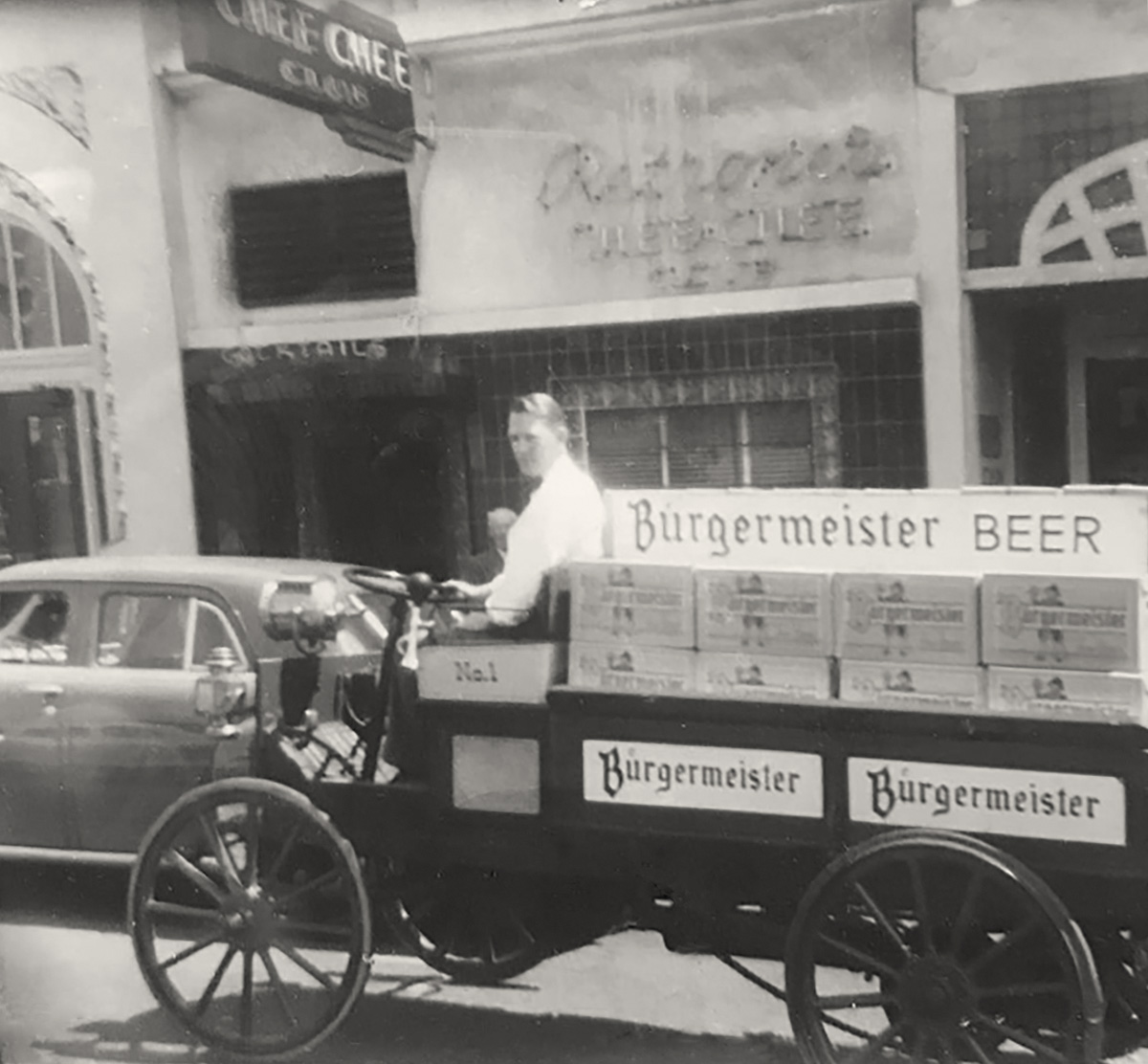 (1941-✔) The Chee-Chee Club is a landmark San Diego cafe and gay/dive bar established in December 1941 by brothers Joseph and James Petrone. They formally opened on January 3, 1942, offering “famous filet steaks and fried chicken dinners” they’d come to be known for at Petrone’s and the Plaza Coffee Shop. But now they had entertainment and hard alcohol to boot!
The Petrones took an old fireworks store on the ground floor of an apartment building and built it out as their club. Talk about “distinctively different” — how would you like to live above a shop full of fireworks?
East Village
929 Broadway Avenue
San Diego, CA 92101
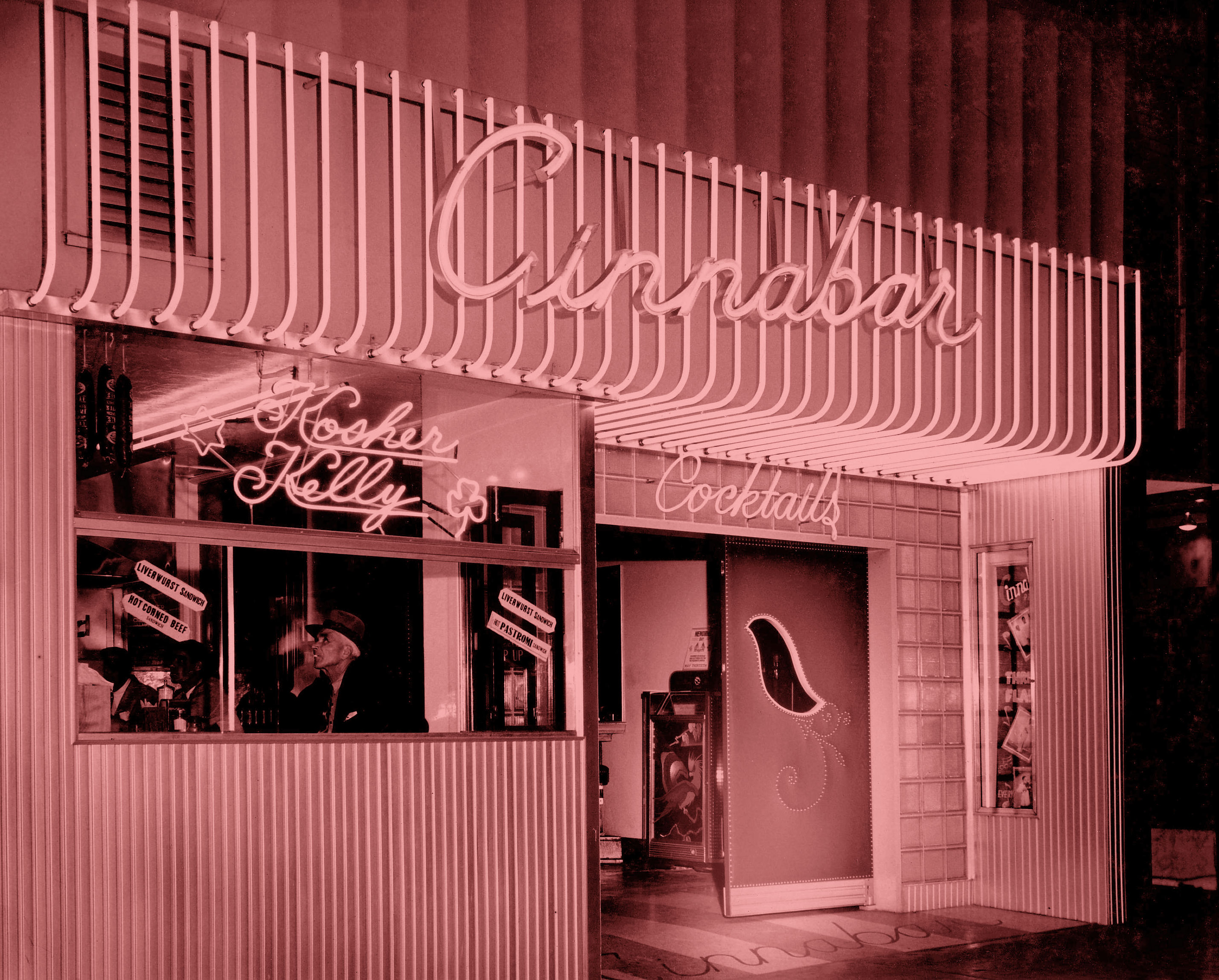 (1942-1953) The Cinnabar Club was an early San Diego gay bar and nightclub — originally El Trojan Cafe — founded in 1939 by Hank Milan, his brothers, and LeRoy Bocardo. After San Diego’s military wartime ramp-up, El Trojan was retooled as the Cinnabar. Cocktails. Food. And live entertainment nightly, broadcast on KFMB Radio — “Tune in for the Cinnabar Stars!” The Cinnabar made Billboard Magazine’s 1944 list of “Leading Cocktail Lounges” (think Billboard’s TOP 100).
It became a well-known bar for the then-mostly closeted gay community. So much so, San Diego and the Cinnabar in particular were viciously portrayed in muckrakers Jacquin Lait & Lee Mortimer’s tell-all, USA Confidential (1952). Lait was a veteran journalist and editor at the New York Daily Mirror who had little tolerance for anything or anyone who did not espouse conservative McCarthyism.
Gaslamp Quarter
852 Fifth Avenue
San Diego, CA 92101
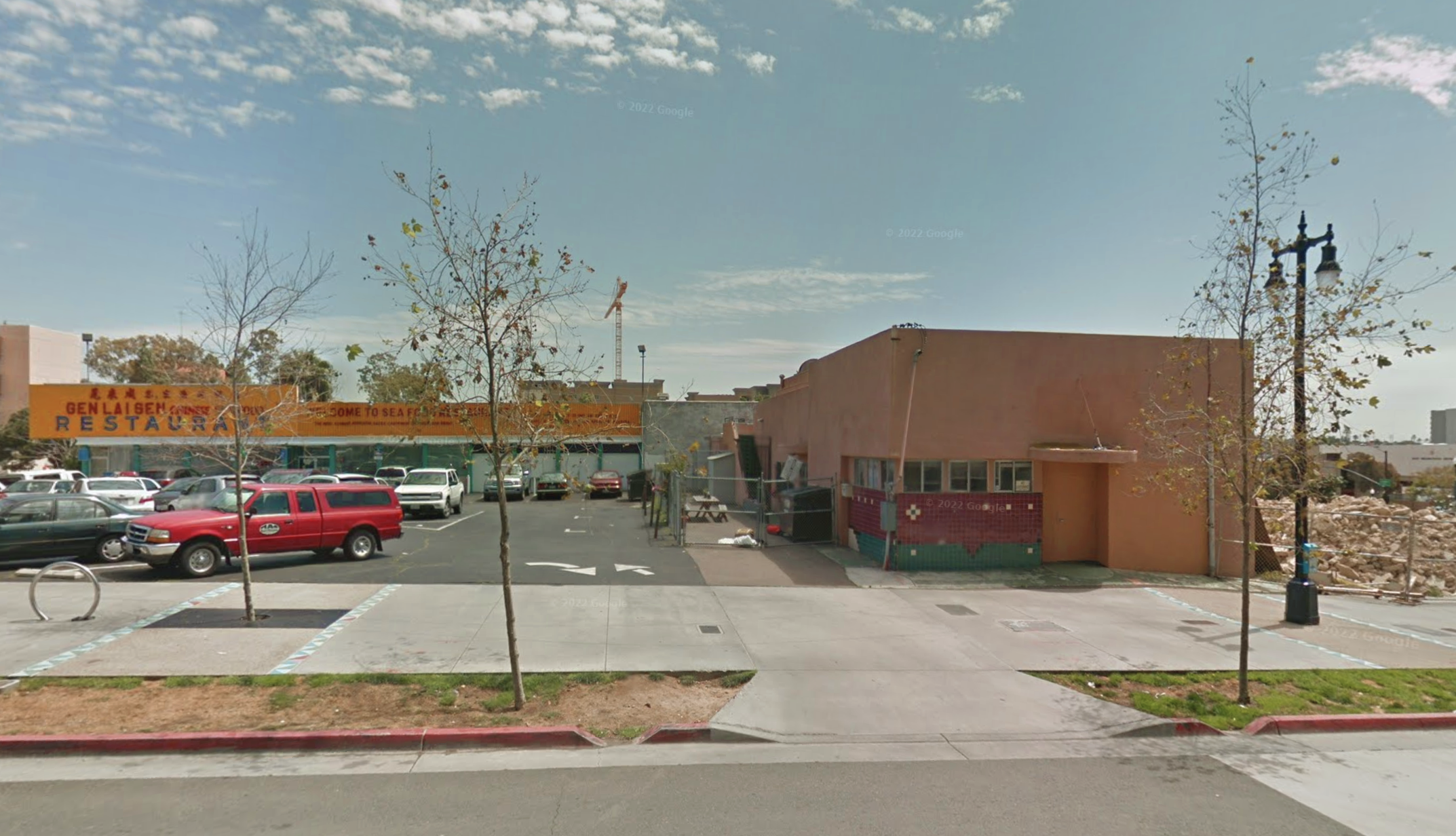 (1946-1957) Johnnie Blackett’s Copacabaña was a tropical nightclub and restaurant in San Diego which became a popular meeting place for the post-war gay community, as did the original Brass Rail and Chee-Chee. John Redmond Blackett (Silver Castle soda fountains, Blackett’s Drive-Ins) opened the Copa on Friday night, February 22, 1946.
It was billed as San Diego’s “glamour club,” with “gorgeous” tropical murals hand-painted throughout by local San Diego artist and graphic designer Douglas Bliss Weaver, also an army veteran of the 104th Timberwolves. The menu featured a provocative sketch from his artwork, and steakhouse dinners by Chef Albert. Johnnie and his second wife Mary ran it until they sold about 1957. It became the Mario’s Italian Village Restaurant and then the Tropicana Latin nightclub. It is today demolished.
East Village
1039 Park Blvd
San Diego, CA 92101
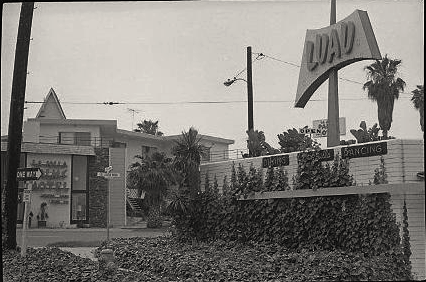 (1957-1974) Skipper’s Twin Palms restaurant and Calypso Room cocktail lounge. Irene and John Bretz owned the quiet La Jolla Palms motor court hotel for ten years before newlyweds Mary and Garland Bowie Hunter (1915-2010) bought the attached bar business and opened Skipper’s Twin Palms in 1957. The hotel was enlarged in 1959 with a modern Polynesian style by Charles Byron Hewlett. The Hunters stayed on after the hotel’s remodel, and over the years Skipper’s Twin Palms piano bar, the Calypso Room, became a well-known, safe haven for the local gay community.
Windansea
La Jolla Palms Motel
6737 La Jolla Boulevard
La Jolla, CA 92037
 (1960-2018) The Caliph was San Diego’s longest-running piano bar. Opened in 1960 by brothers Al, Frank, Nick, and Vincent Desanti (The Lamplighter, Big Al’s) with Charley Cannon on the piano. They reportedly spent $35,000 on the “plush” Moorish-motif neighborhood joint.
“You mean you don’t know about The Caliph?” Frank Rhoades not-so-subtly asked the question. “It’s the upper Fifth Avenue bar where so many professional men hang out…”
A laid-back safe space, with an older male clientele, it was an iconic gay bar. Live piano entertainment by Kenny Ard, Don LeMaster, and Ria Carey. Karaoke, cocktails, and always fresh popcorn.
Not necessarily a speakeasy per se, “Her Closet,” was a secret room in the Caliph where cross-dressing men, drag queens, and transgender women could dress up and let their hair down. Her Closet offered clothes, cosmetics, and camaraderie plus a place to change clothes before hitting the bars.
“When I bought the place,” said owner Sherman Mendoza, “I always wanted it to be all-inclusive — gay, straight, transgender, young, old, men, women. It was always open to everyone.” The bar closed at the end of Mendoza’s lease and sale of the building to developers.
Bankers Hill
(2003-2018, Sherman Mendoza)
(1980s-2003, Warren Phillips)
3100 Fifth Avenue
San Diego, CA 92103
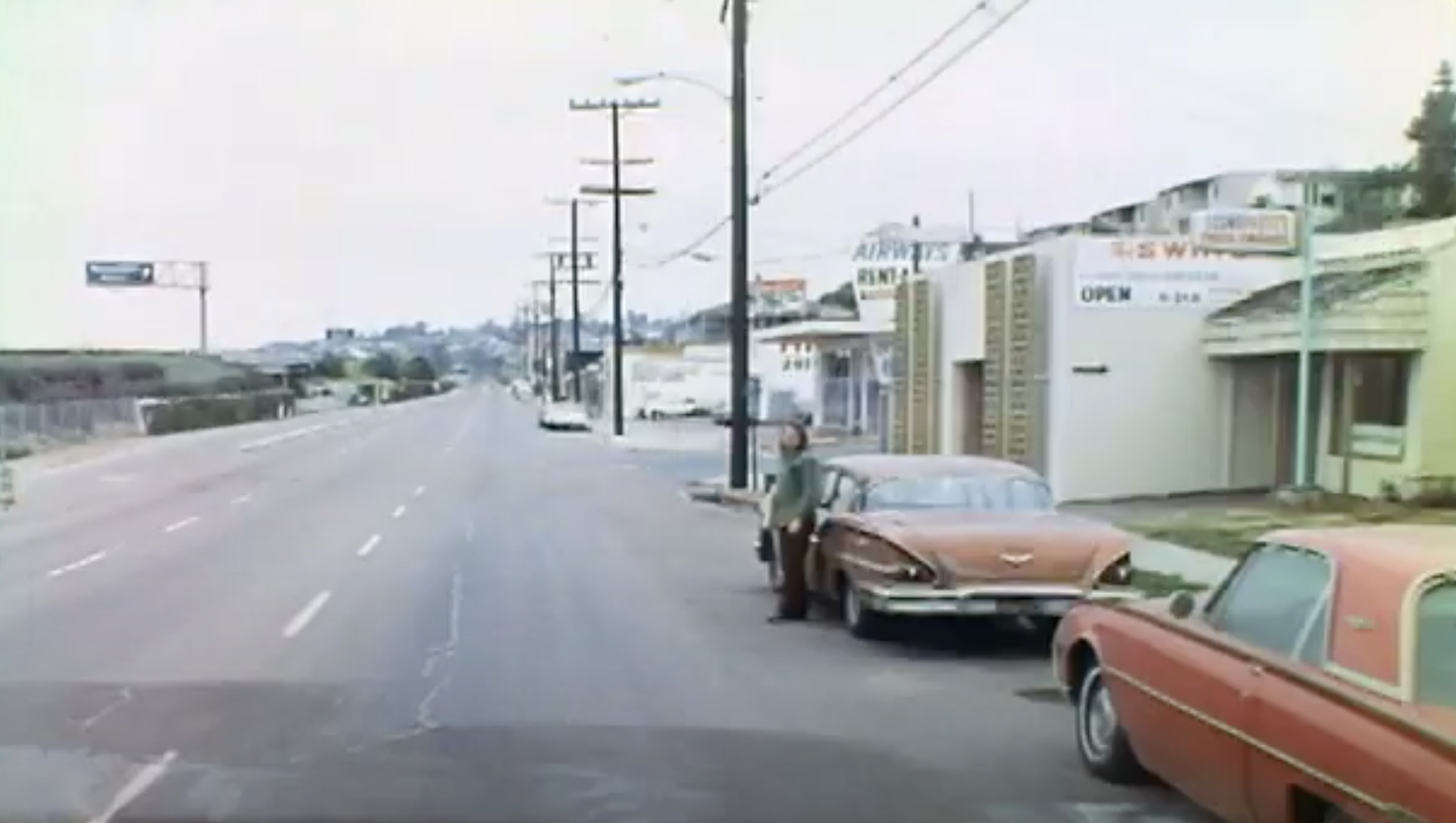 (1970-1976) Arnold O’Connor’s The Swing was known as a sophisticated cocktail lounge that catered to gay clientele. It was previously known as Club Shoji — an intimate jazz club with continuous entertainment that booked musicians like Bud Shank, The Vibe-Tones, and Cal Tjader. ($2 cover!) Free buffet on the weekends. In 1976, bartender Gary Dores was murdered in a holdup at The Swing. Alex Alve was convicted of the hate crime and several other crimes against young men and an elderly woman.
It became the LGBTQ-friendly Starlite Lounge in 2006, when Tim Mays (Pink Panther, Casbah, Turf Supper Club, Krakatoa), Matt Hoyt, Steve Poltz, and partners transformed the aging bar into a once-again sophisticated “Portland-style” cocktail lounge. A San Diego early-adopter of craft cocktails — Starlite Mule (don’t steal the copper mug), Mint Julep, Buffalo Grass Cucumber Martini, Brandt beef burgers, and farm-to-table cuisine by chef Travis Murphy. After Hoyt’s untimely death due to cancer, Consortium Holdings purchased the bar in 2022, closed and upgraded the interior. It recently reopened as the revamped Starlite.
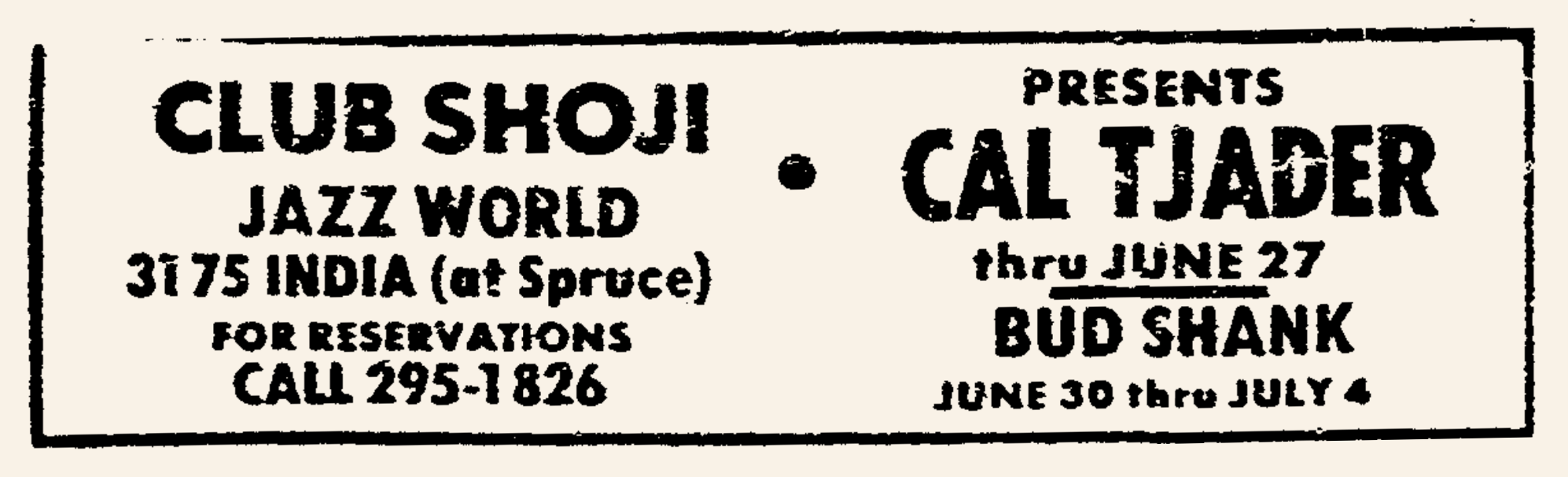 Middletown
Club Shoji (1964, Kelly)
The Swing (1965-1976, Arnold O’Connor)
A Different Drummer (1976, cocktail lounge)
La-Bido’s Strip Club (1987)
Club Bombay (1994-2003)
Six Degrees Restaurant (2003)
Starlite Lounge (2006-2024, Tim Mays, Matt Hoyt)
Starlite (2025 – now, Consortium)
3175 India Street
San Diego, CA 92103
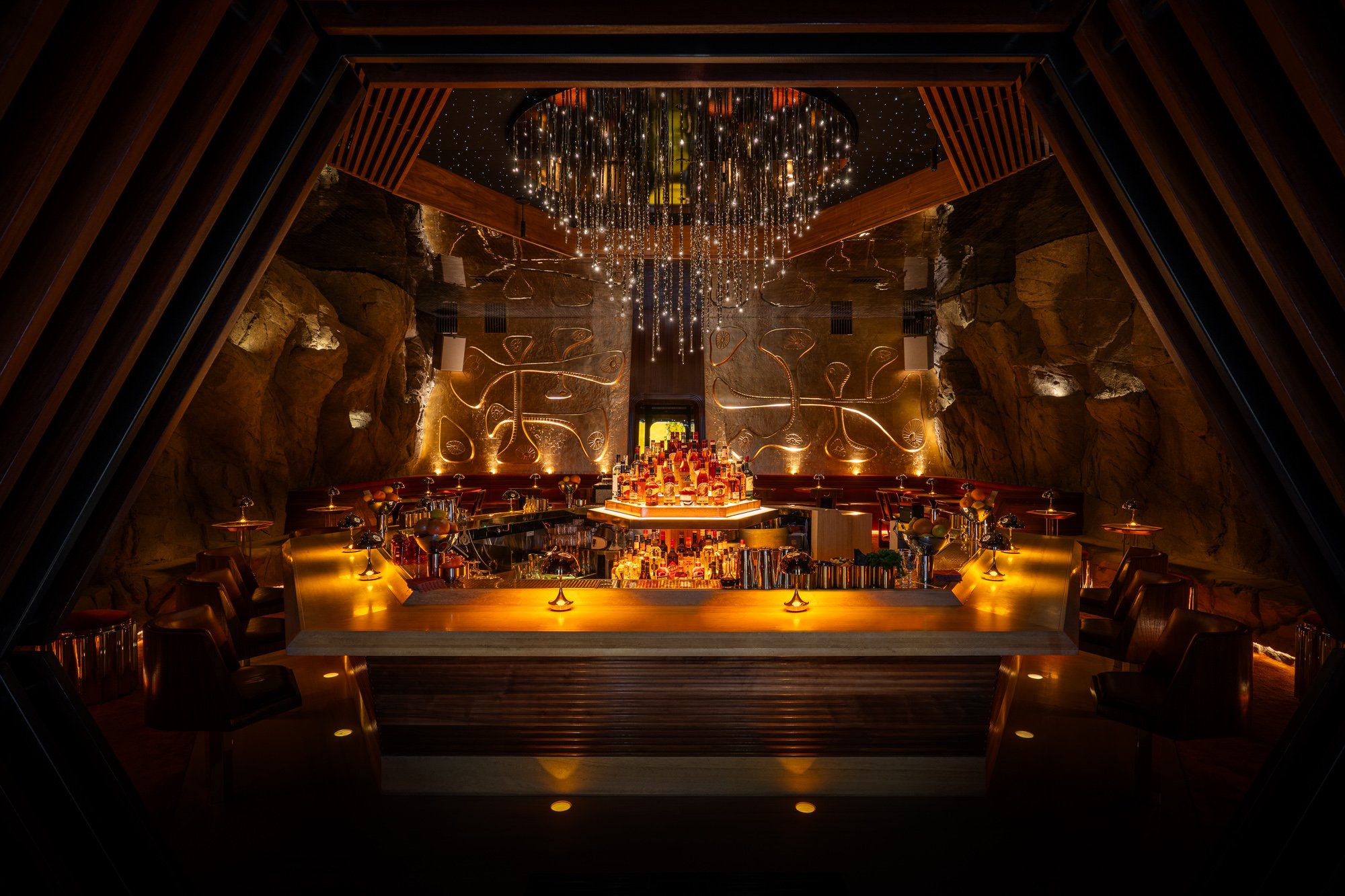
Starlite Lounge, San Diego. Photo, Starlite, Kimberly Motos.
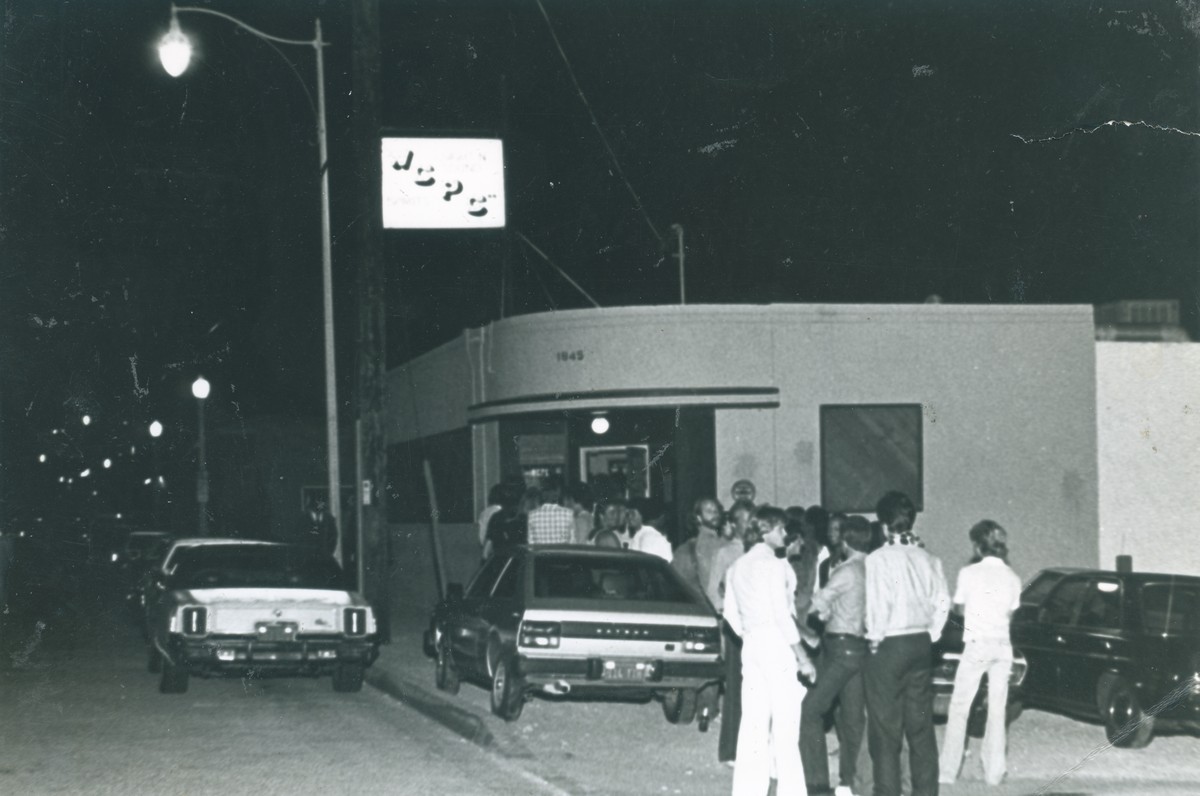 (1977-1996) West Coast Production Company was a legendary gay nightclub in San Diego that played a pivotal role in the city’s LGBTQ+ history during the 1970s and 1980s. Founded in 1977 by Chris Shaw (Mo’s Bar & Grill, Baja Betty’s, Hillcrest Brewing, Gossip Grill), WCPC was located on Hancock Street near the airport in the Five Points warehouse district. WCPC (also known as the “Wussy Pussy”) became one of the most iconic venues in the local gay scene, with its party-hearty atmosphere, three packed bars, and a “massive” dance floor. Events like amateur strip contests and Jell-O wrestling with drag tag teams. Their parking lot hosted the San Diego Pride Festival from 1982 through 1984, until it outgrew the space. WCPC was one of the first to enter a professionally built float into the Pride parade.
Five Points
2028 Hancock Street (1977-1996, Chris Shaw)
1845 Hancock Street (1977)
San Diego, CA 92110
Notes
Selected Sources: Damrons Directory 43, second edition, Minneapolis, MN: Directory Services, 1964. 1965 International Guild Guide, Washington, DC: Guild Book Service, Jan 1965. The Guild Guide, 1971. The Guild Guide, 1972. “San Diego’s Gay Roots — The Brass Rail,” Hillcrest History Guild, 19 Mar 2013. Allison Tate, “This History of Gay Bars Is Also a Tale of LGBTQ Liberation,” The Advocate, 21 Mar 2019. Paul Detwiler, “San Diego’s Gay Bar History: Reflections on Community History and Documentary Filmmaking,” The Journal of San Diego History, Spring 2019. Jennifer McEntee, “Meet the Hillcrest Business Owners Who Helped Shape the ‘Gayborhood,’” San Diego Magazine, 14 Jul 2021.
Numbers
Before it was Numbers, Meyer’s Jacobsen had Park Place bar and Boardwalk Cafe restaurant there. It would have been in the ’80s, I think.