
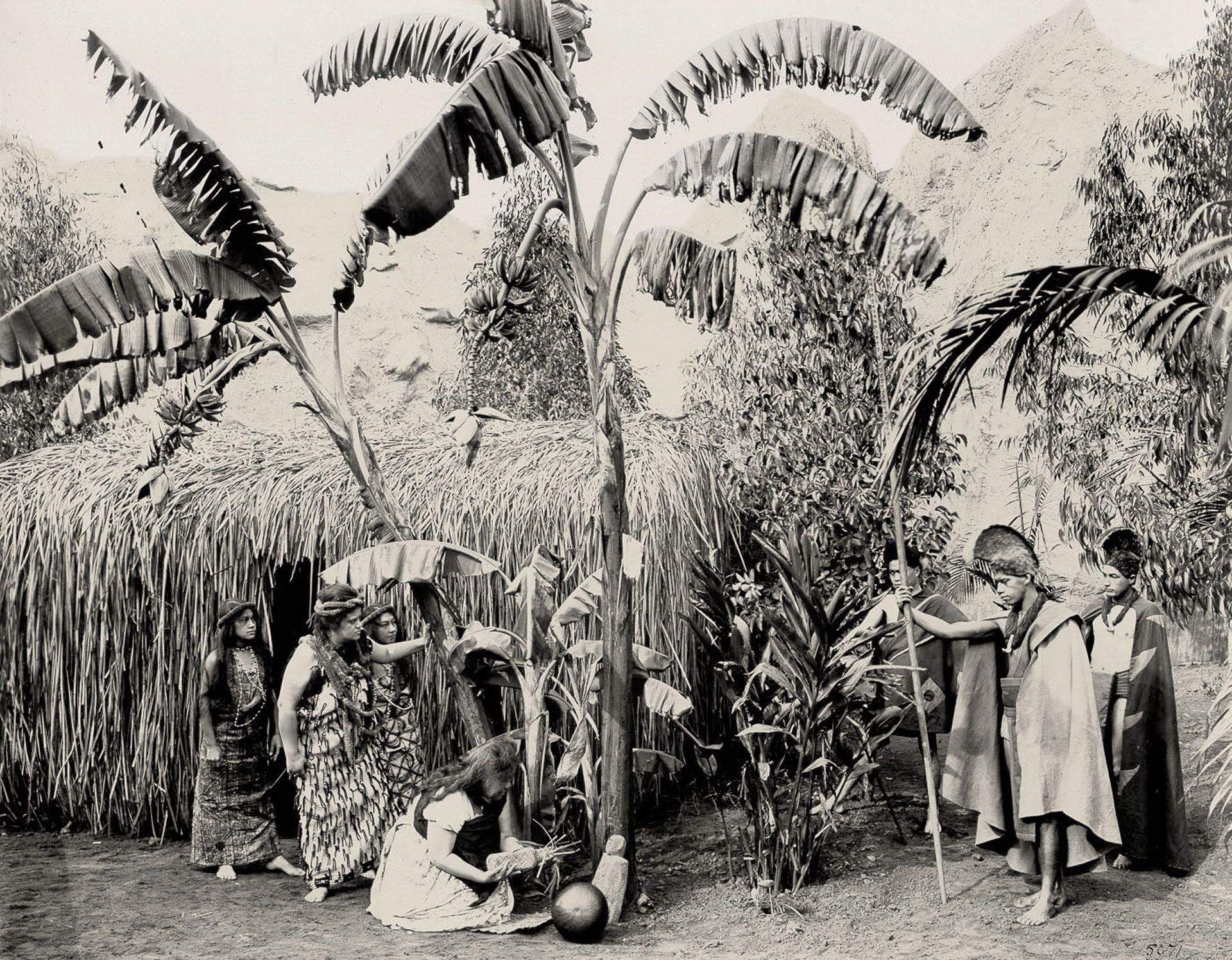
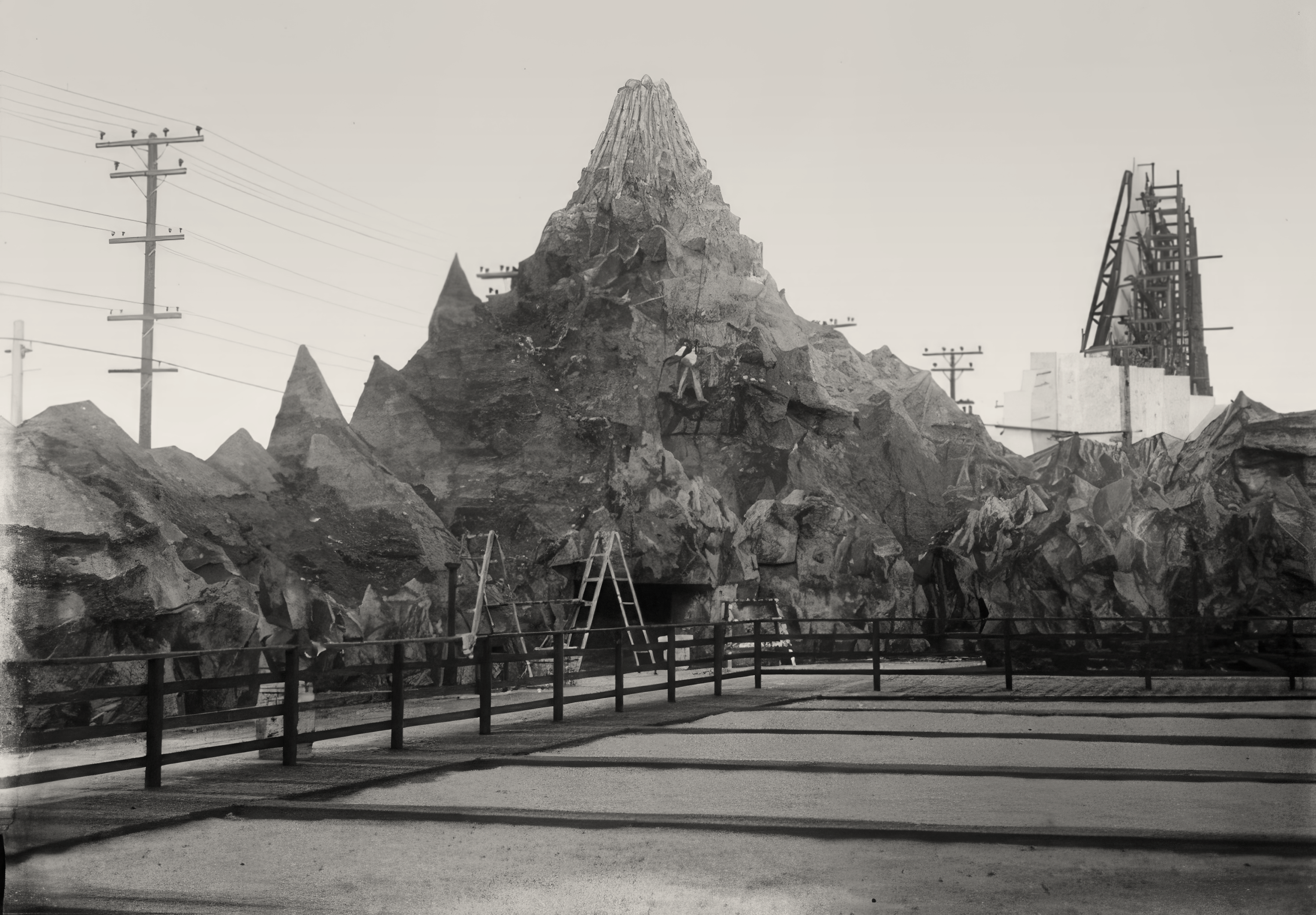
Seen from behind the exhibit, a worker puts finishing touches on the San Francisco Hawaiian Village’s volcano, 1915.
Introduction of Hawaiian Culture to San Diego
Author, playwright, producer, and soldier-of-fortune Kenneth Bertram Croft (1877-1959), it is written “was a busy man in the years leading up to the opening of the exposition.” His company, the Kenneth Croft Amusement Company (established with his wife, mezzo-soprano Nona Malli, and future Hollywood director L.A. Howland), was awarded the concession rights to build the Hawaiian Villages at San Diego’s Panama-California Exposition and the Panama-Pacific International Exposition in San Francisco. The company also operated the Irish Village in San Francisco and the Cristobal Cafe in San Diego.
Croft enlisted the Ka‘ai Music Bureau of Honolulu, described as the “headquarters for everything in music and musical talent.” He requested that the agency find artists for a year’s residence with his Hawaiian Village concessions, which would be concurrently run in San Diego and San Francisco. Ernest Ka‘ai was appointed manager of the Hawaiian Village, responsible for booking dancers, singers, and musicians from the Islands. Kaʻai was well-known as a composer and ukuleleist after touring with his quintet, Ernest Kaai’s Royal Hawaiian Troubadours. Aside from the music bureau, he ran a ‘ukulele and mandolin school in Honolulu.
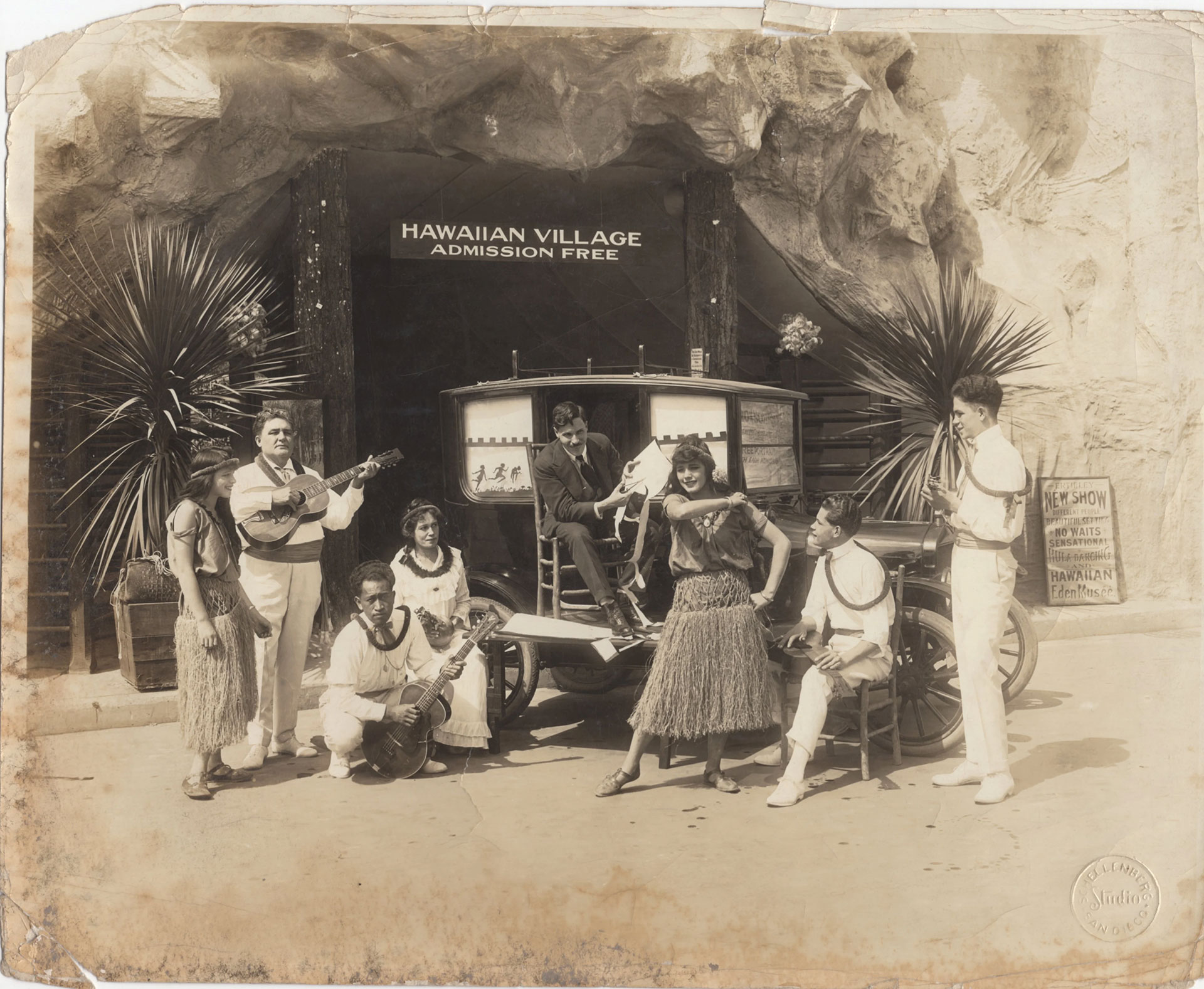
The Shaw family at the Hawaiian Village on the Isthmus, Panama-California International Exposition, San Diego, 1916. Photo, M. Otto Schellenberg | Winifred Shaw Matteson Collection.
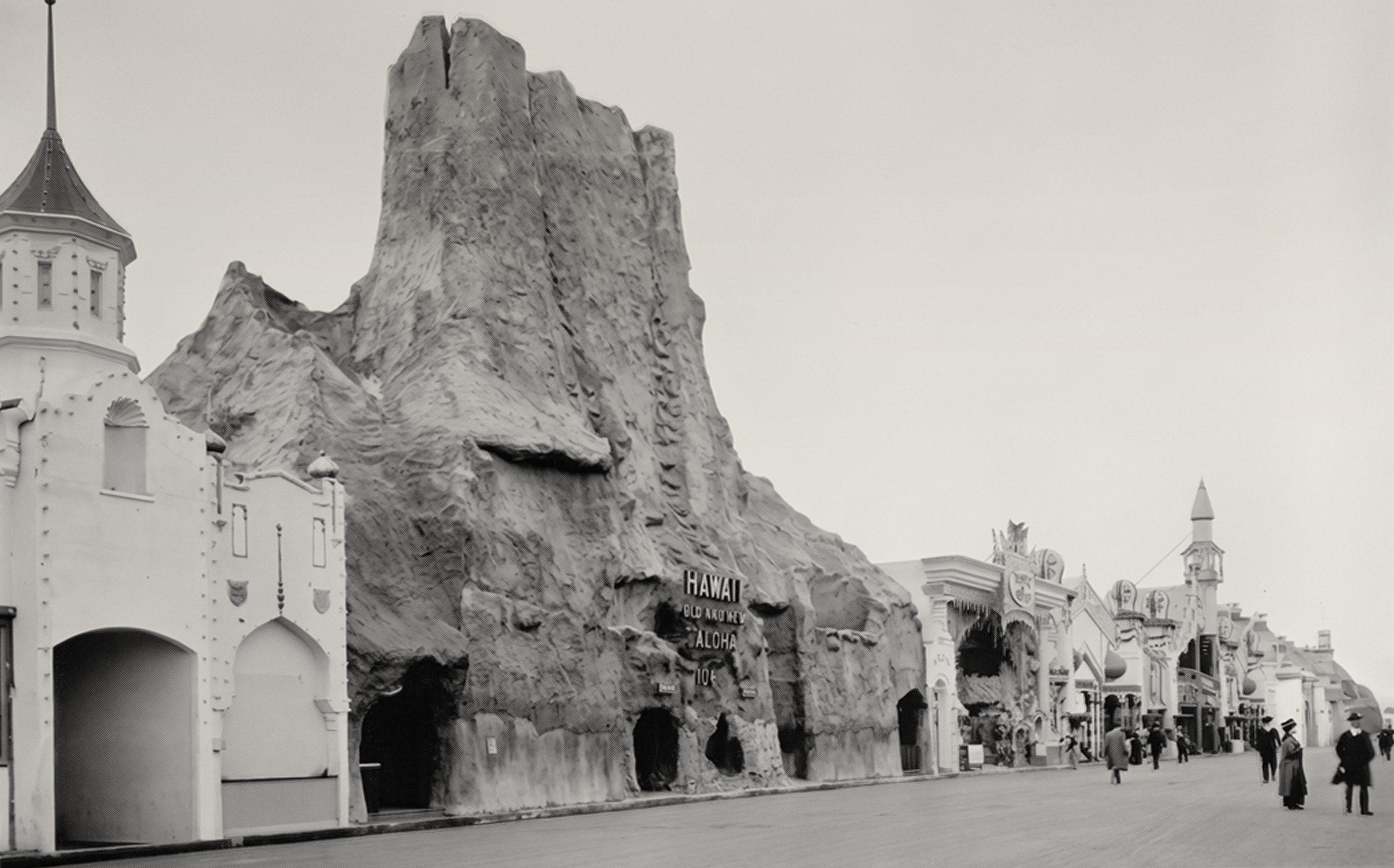
Hawaiian Village on “The Isthmus” midway (now, where the Balboa Park Train and Carousel are located), Panama-California Exposition, 1915.
A Trend to Come: Exotica Designed in Hollywood
The Hawaiian Village building was designed by resident architect Max Parker and located in “The Isthmus” amusement area. Its rocky facade recreated the Kilauea volcano, with entrances to exhibits of Hawaii’s old and new, and Waikiki Beach. The volcano spewed steam, smoke, and flames from rifts in the faux stone. And in its crater? The Village, an open-air Grill (serving island food, pork, poi, awa kava, and the ‘Hawaiian Cocktail’) and main stage surrounded by imported tropical plants. Daily shows within the village educated patrons on traditional Hawaiian song and dance, folk music of ohe hano ihu, ‘ukulele, and steel guitar. Exhibitions of the royal hula-hula were given — for a separate fee — in a grass hula hut under banana trees at the rear of the village. Inside a temple at the center of the village, resided a four-foot-tall carved stone Tiki god, obtained by show producer Croft with guidance from Ernest Ka’ai.
“He has been guaranteed by the priest of Pele to be able to do some starting things,” bragged Croft. “He is made of lava and was made by the painstaking work of two generations of natives who used no metal, but slowly shaped him by constantly rubbing with some harder stone.”
Also shipped to the exhibit were war canoes, kahili standards, clubs, spears, and an outrigger, reportedly once belonging to Kamehameha. It took more than several truckloads of performers, staff, props and equipment for the trip.
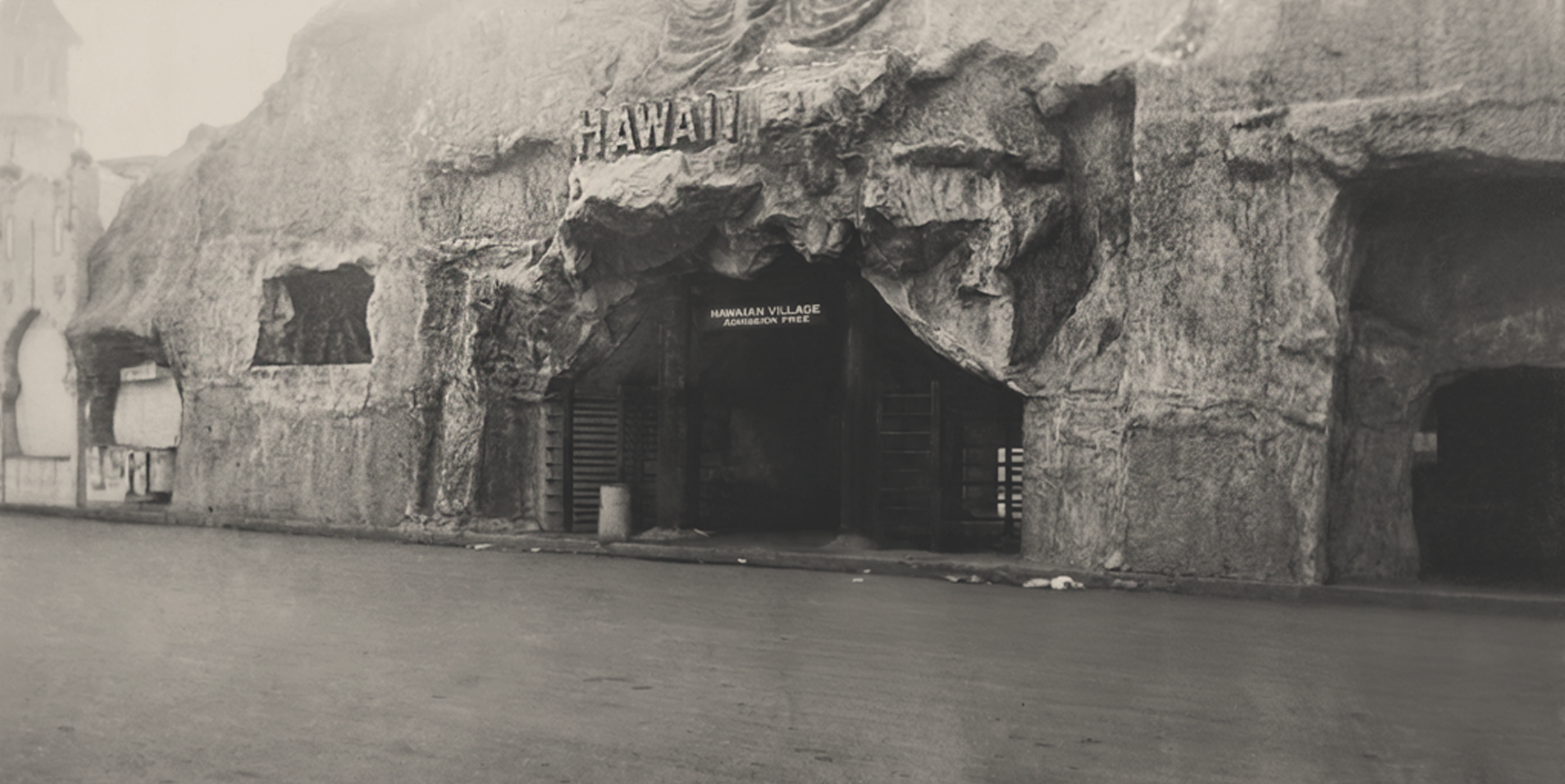
Facade of the Hawaiian Village exhibit, Panama-California Exposition, 1916.
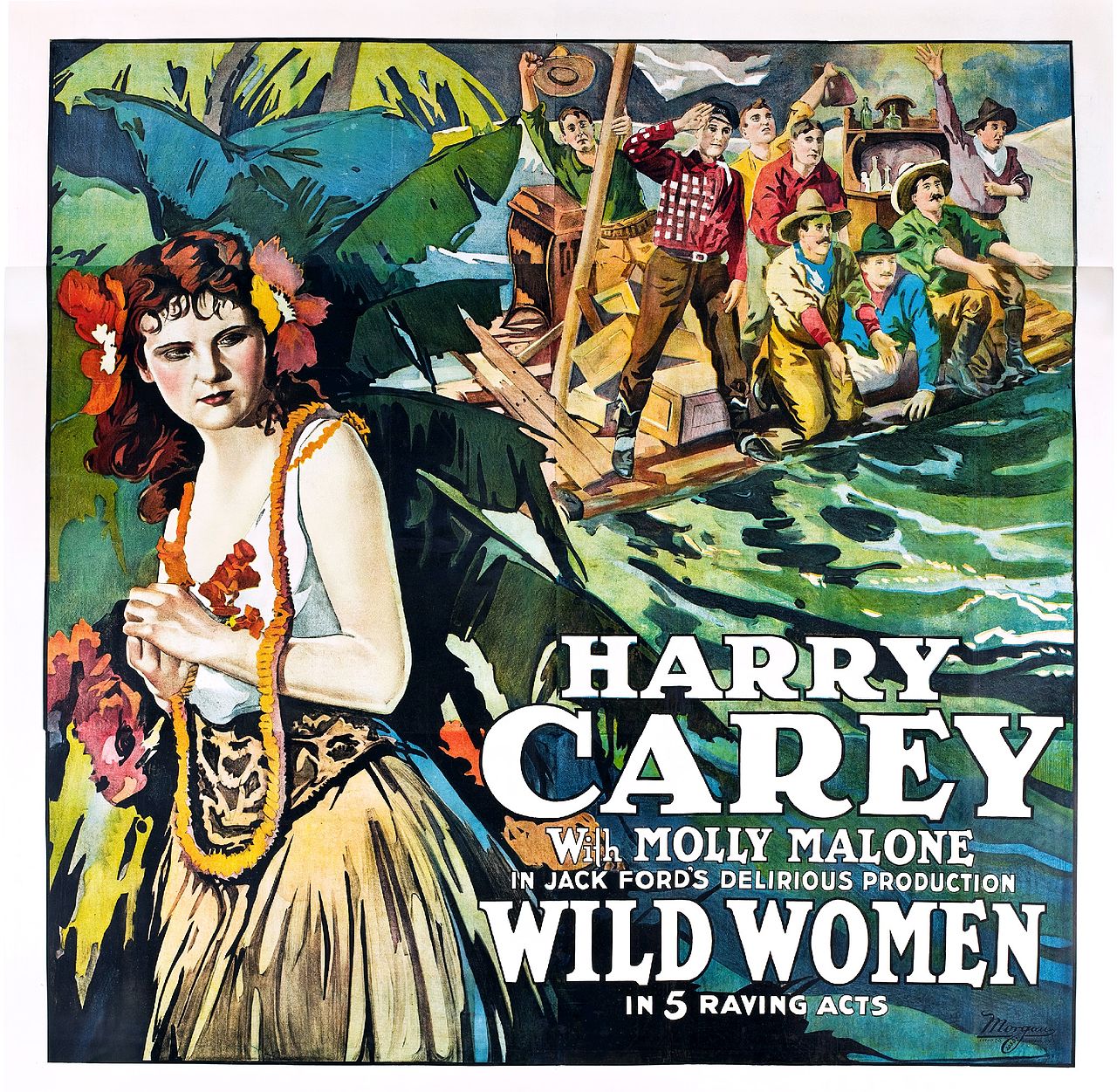
Max Everts Parker (1882-1964) designed over 20 exhibits and buildings for the exposition. His interest in designing for film began during the run of the expo — the now lost Wild Women silent was filmed atop the Hawaiian Village, featuring Mabel Norman being flung into the faux volcano. Parker became an art director for Douglas Fairbanks, Mary Pickford, Warner Brothers, and 20th Century Fox (The Roaring Twenties, China Clipper, Arsenic and Old Lace). Members of his family settled in Hawaii.
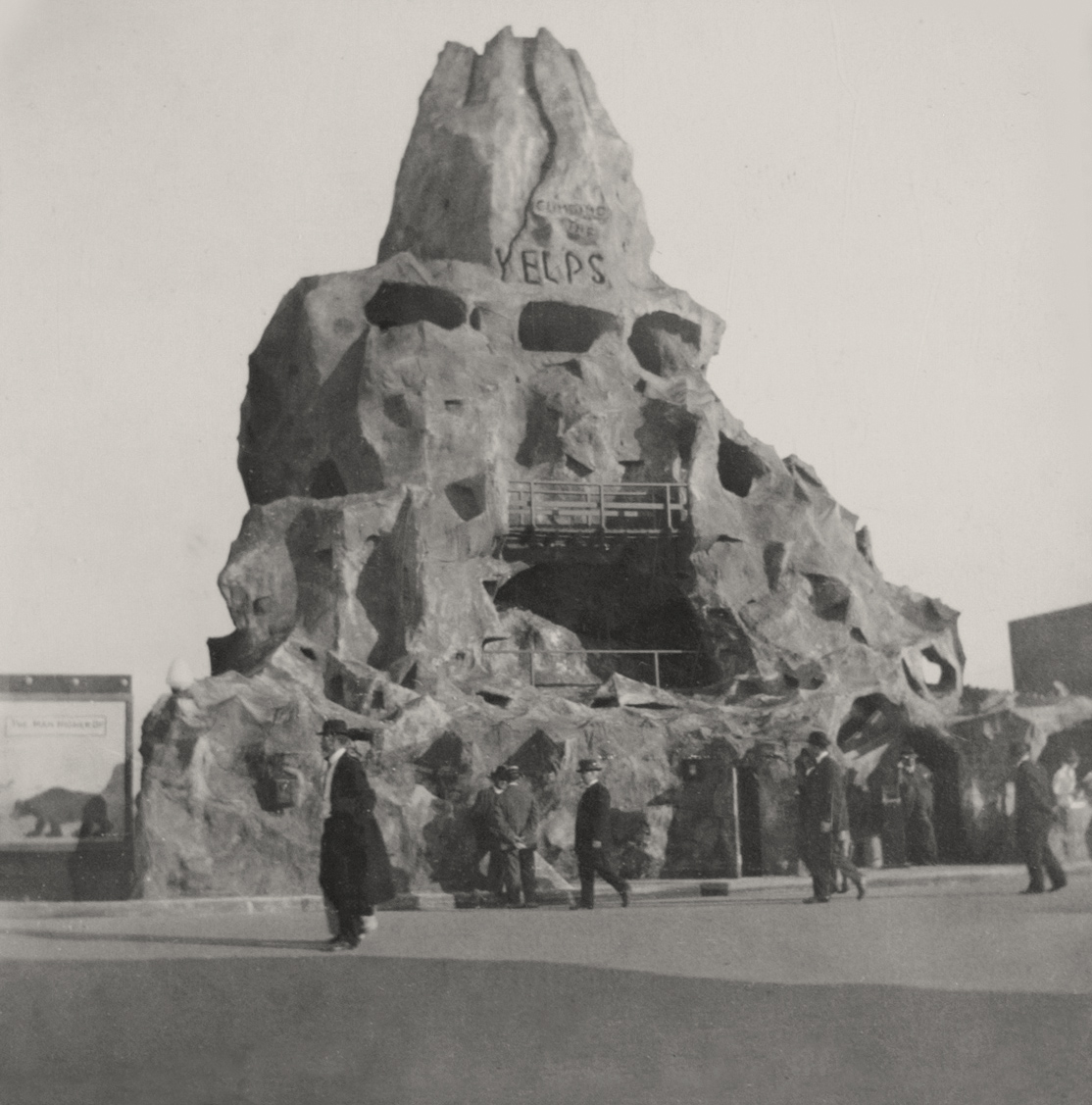
Side note for Yelp Elites and Disney Matterhorn lovers: If you craved volcanic eruption terror, a nearby ride called “Climbing the Yelps” would propel you into the interior of an erupting volcano. “I really wanted to like this ride, but… ” Photo, Panama-California Exposition Digital Archive.
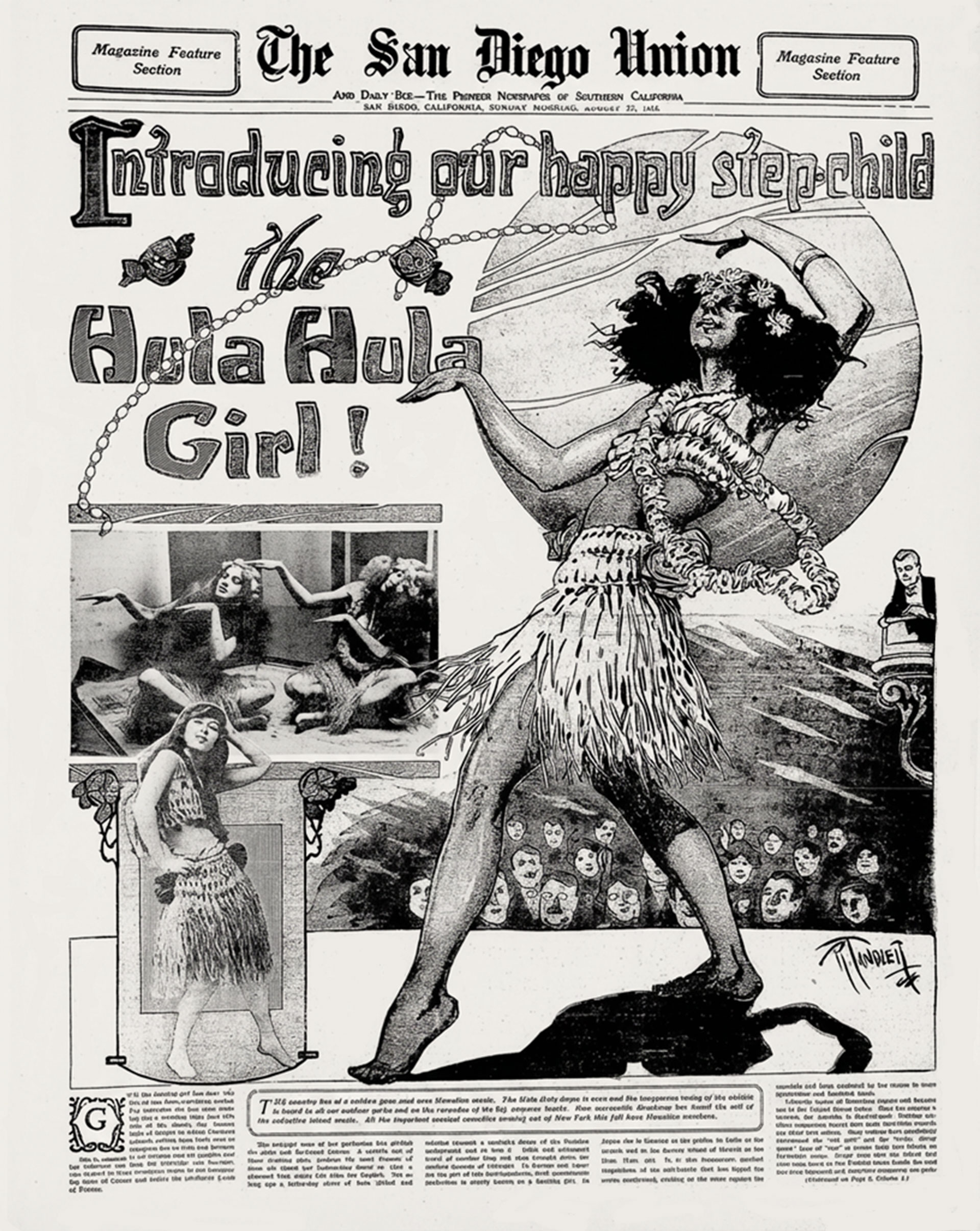
Sunday newspaper magazine section, roiling about the expurgated versions of the “hula-hula” dance increasingly available in 1916. Notably, in San Diego’s Hawaiian Village, at the Panama-California International Exposition.
The Hula Hula Hawaiian Music Craze
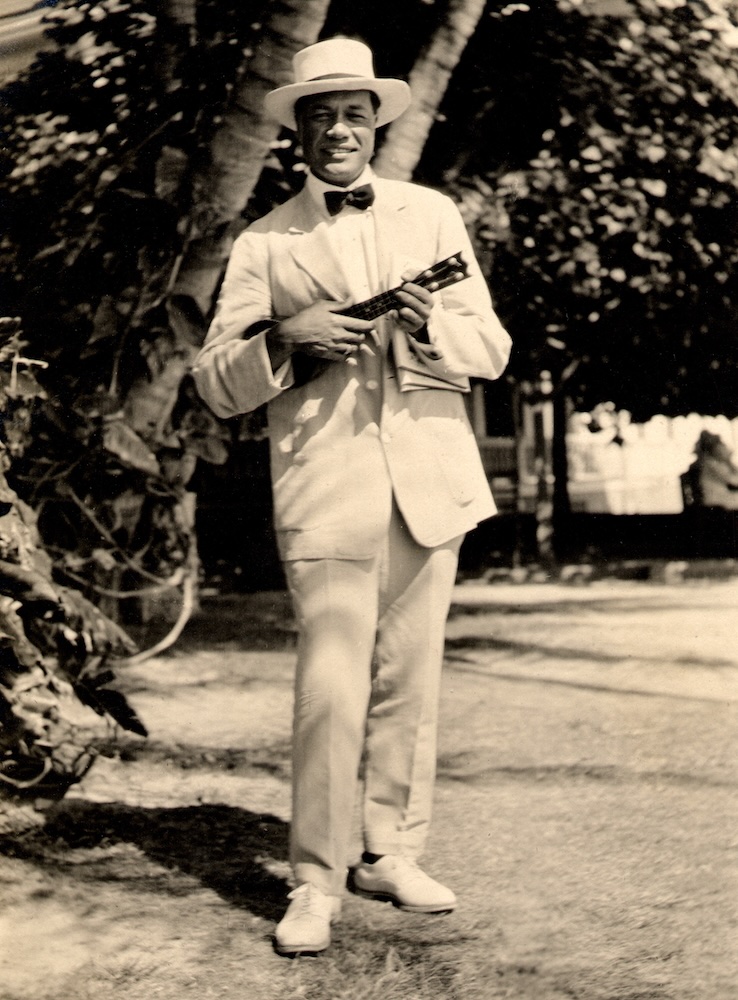
Ernest Ka’ai in 1917. Photo, ‘Ukulele Hall of Fame.
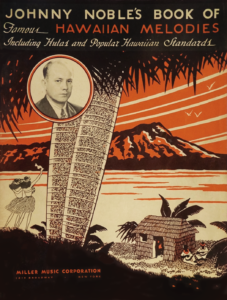
Johnny Noble was instrumental in popularizing Hawaiian music.
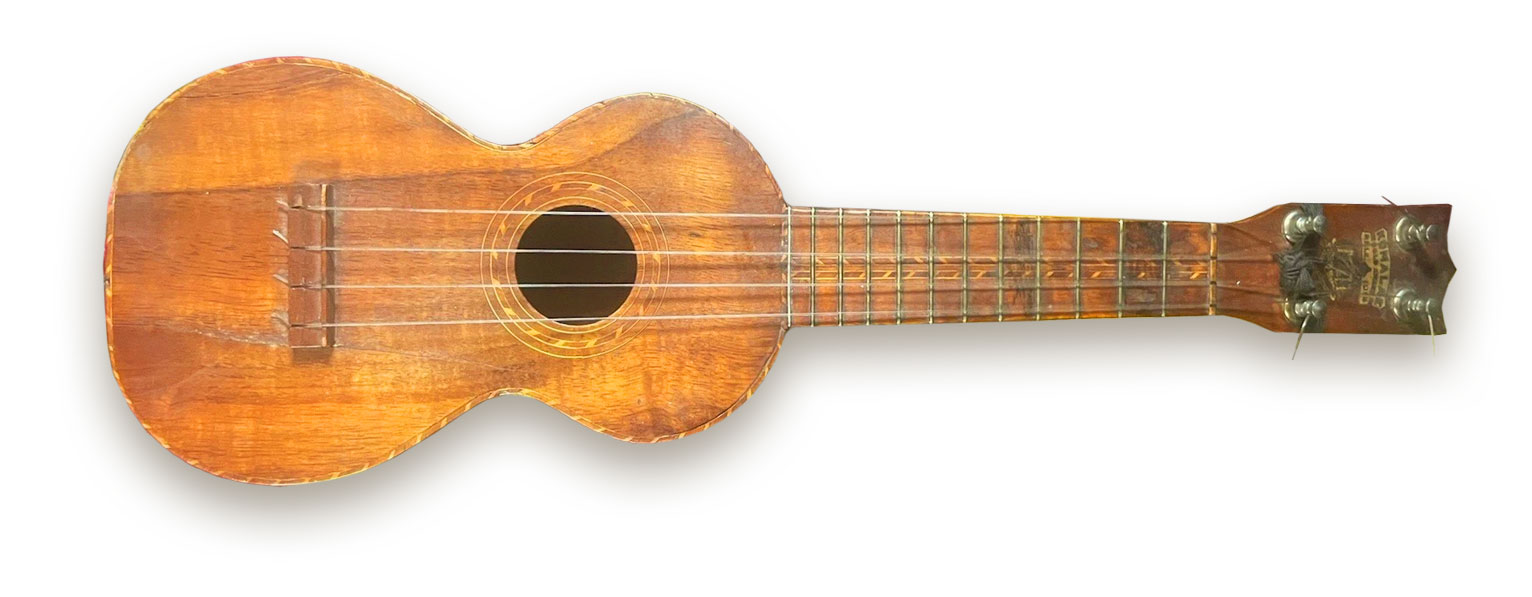
Kumalae Gold-Award 1915 Panama-Pacific Expo koa wood soprano ‘ukulele.
Kenneth Croft promoted his heavy-hitters, the Shaw family from Portland, in 1915 in San Francisco. James Edmonds Shaw (1865-1924) hailed from Honolulu and had performed in the first Hawaiian Village “Cyclorama” at the Chicago World’s Columbian Exposition in 1893. The “Hawaiian Caruso” was hapa haole — half English-Irish and half Hawaiian. His wife, Esther Pua Kinamu Stephenson Shaw (1872-1946), sang and played ‘ukulele with the troupe. Heavily publicized were Shaw’s young daughters, Elizabeth Jonia Leilokelani Shaw (“Princess Lei Lokelani,” or “Libby” to her family), Esther Kenaleolani Shaw (1904-1954), Winifred Shaw (1907-1982), sons George Alapai Shaw and Edward Kaauwai “Eddie” Shaw (1895-1965) on steel guitar.
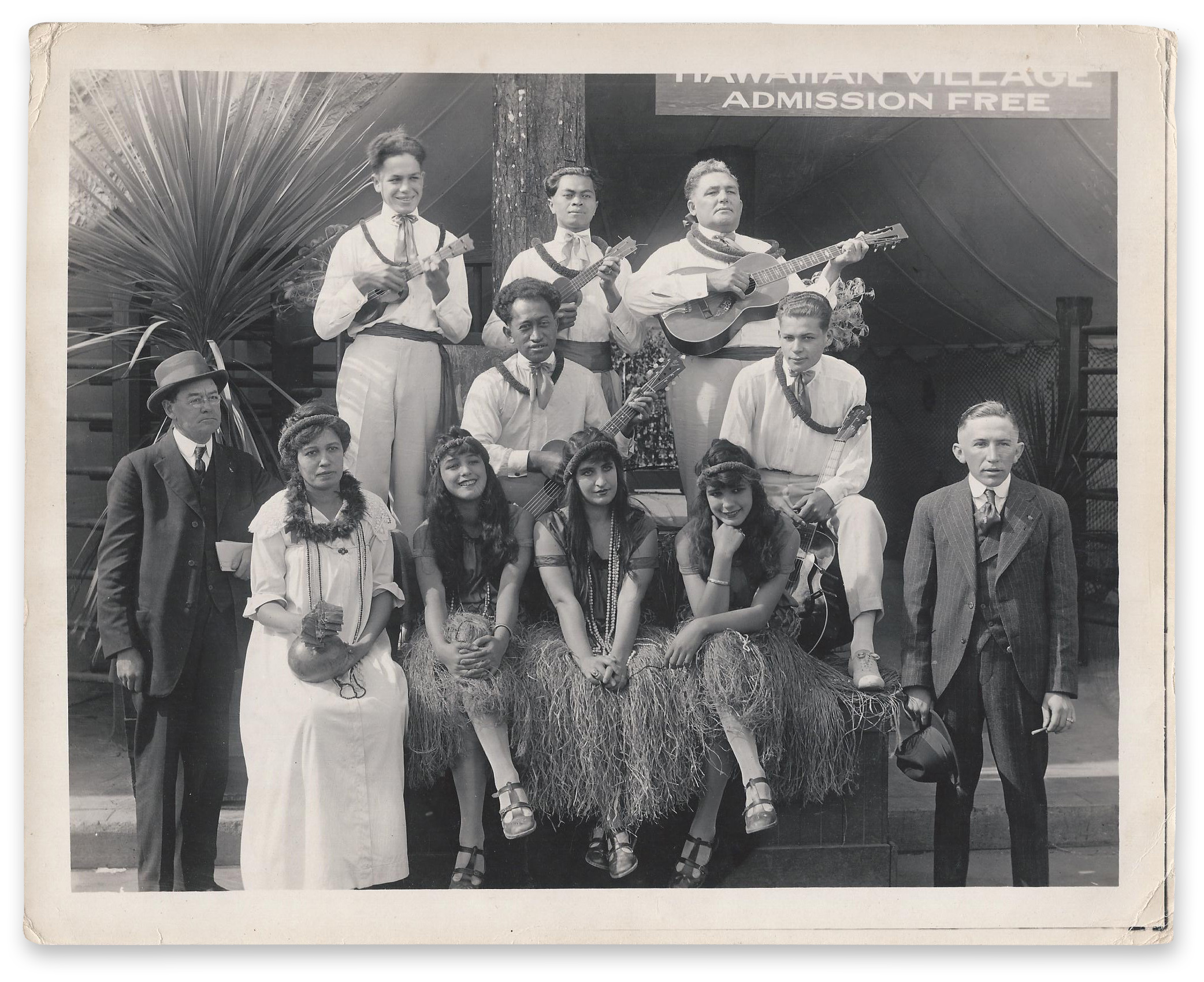
The Shaw family at the Hawaiian Village, San Diego, 1916. Photo, Winifred Shaw Matteson Collection.
Upon receiving complaints about the hula’s indecency, San Francisco Expo authorities were quick to ban Wini and Esther from performing with the group because of their age. These puritan judgements have had a long history. The hula was once banned due to the influence of missionaries who thought it promoted “heathen beliefs.” Tourism advertising objectified and sexualized the deeply spiritual, historical, and sacred Hawaiian art form for profit.
Newspaper writers of the time catered to their mostly male readership noting which exhibits featured girls, and how many at each. Incredulously, when planning both exhibitions, there was considerable debate as to whether dedicated comfort stations were even necessary for women attendees. Powder rooms triumphed.
In fact, Mr. and Mrs. Shaw publicly rebuked the whole affair, and the Shaws left San Francisco when management of the Hawaiian Village insisted upon employing white girls “to dance vulgar dances under the guise of the Hawaiian hula.” Many of the other artists packed up and went with them. The exhibit was quickly retooled as The Girl in Blue peep show. By October, it was permanently closed by the Exposition for indecency.
“If our show here were indecent,” reiterated Mrs. Shaw, “it would have been closed by the city.” She went on to explain to San Diego newspapers the modifications made for American audiences — less sensual moves, and fully clothed dancers — much more modest than the scantily clad “hoochi-coochi” dancers from other Expo attractions.
Shaw family members told me the performers didn’t feel exploited. “They were young, and having fun. And getting paid!”
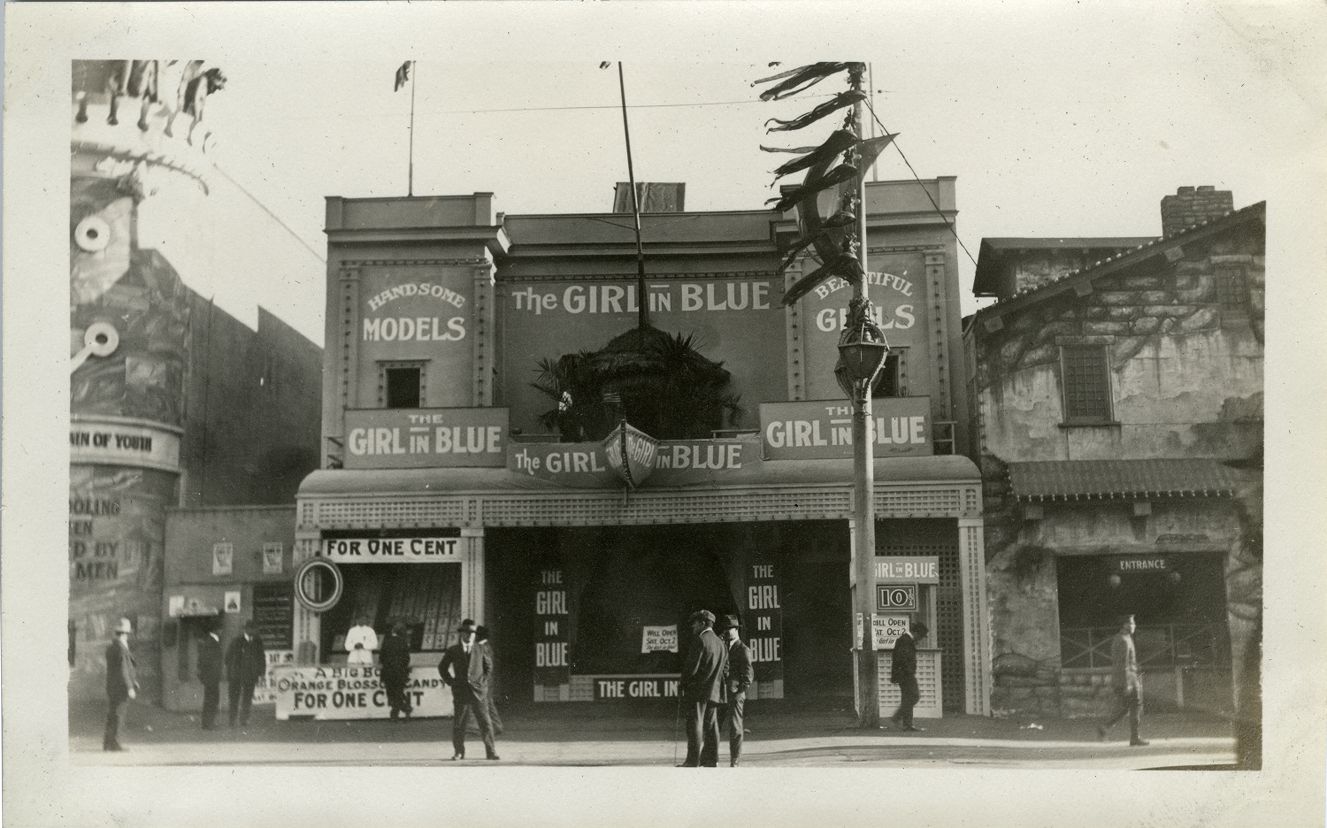
The Girl In Blue replaced Hawaiian Village in San Franciso’s Panama-Pacific International Exposition. Tell-tale evidence can be seen above the entrance — out-of-place war canoes and grass hut. Photo, Theodor Frederic Dierks Collection | Marin County Free Library.
From their new home at the 1916 Panama-California International Exhibition, the Shaws’ Hawaiian Village shows became a San Diego favorite. Members of their troupe performed in events, parades, at Hotel del Coronado’s Tent City band. The inauguration of Hawaii Day at the Exposition was special. In Honolulu, Queen Liliuokalani pressed a button which instantly unfurled the royal flag in San Diego. Female guests received leis. A Polynesian show with fire dancers and singers was held. Moving pictures of the Kilauea volcano were projected over the reflecting pool as Hawaiian entertainers rowed Kamehameha’s outrigger canoe.
For the Exposition and Hawaiian Village 1916 was a good year. And a bad year…
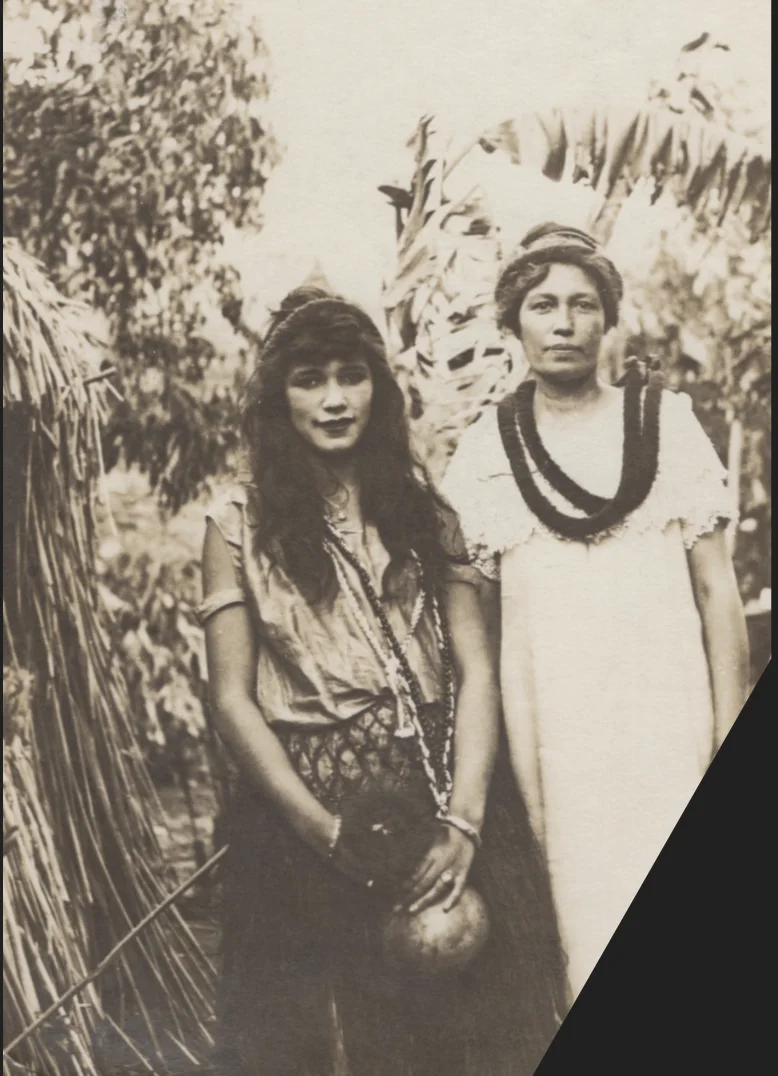
Libby Shaw with her mother Esther. Photo, Winifred Shaw Matteson Collection.
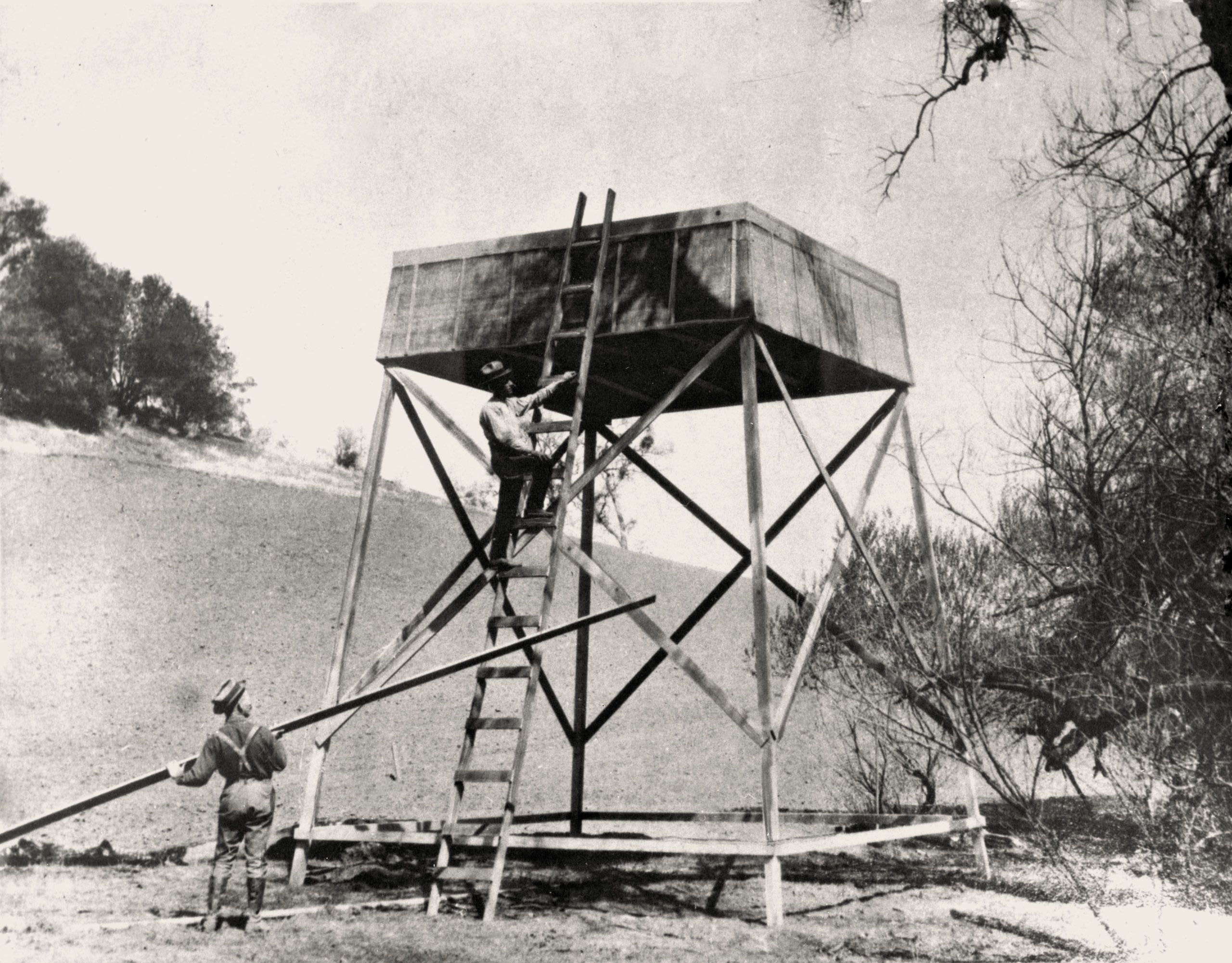
Charles Hatfield sets up his rainmaking tower, January 1916. Photo, SDHC.
When It Rains, It Pours
For years, there had been a drought in Southern California. Perfect weather for an Exposition, but not for everything else. So San Diego city councilmen had the bright idea of hiring local pluviculturist Charles Hatfield of Bonsall make a little rain. Fill up Morena Reservoir why don’t you? Hatfield, a self-described “moisture accelerator,” used his proprietary mix of 26 secret chemicals in tanks built atop towers to seed the clouds.
And oh, it rained. Dams overflowed, bridges were washed out. Lower Otay Dam failed and dozens of lives were lost. The Southland’s atmospheric rivers in January 1916 were the worst disaster since 1858’s hurricane. Charles Hatfield denied culpability for the San Diego Flood and City Council stiffed him on his $10,000 bill. Fingers pointed. Lawsuits mounted. The litigation lasted twelve years. Hatfield did get the last word though. The play and motion picture The Rainmaker are based on his life.
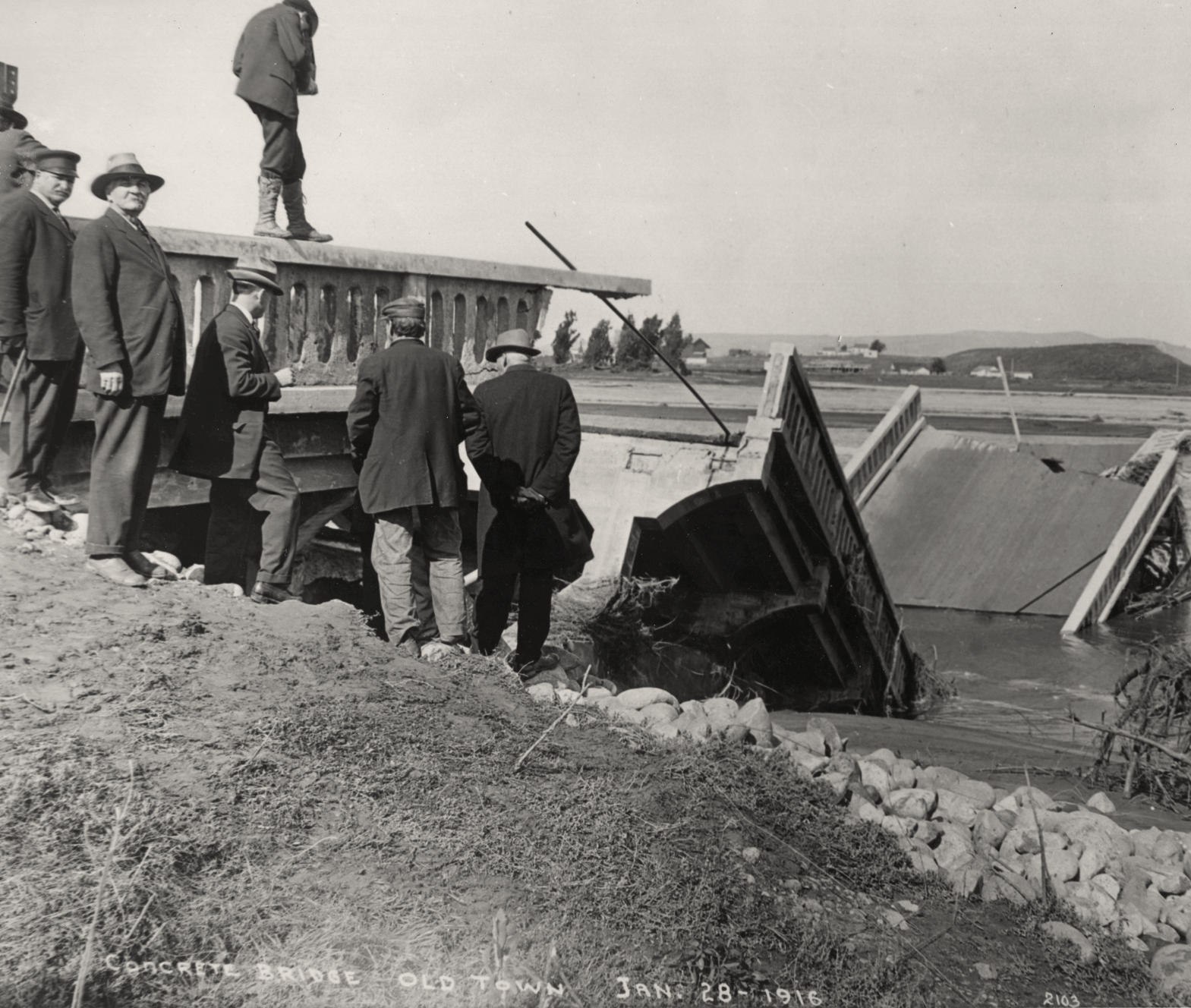
Bridge at Old Town, San Diego destroyed in the Hatfield Flood, 1916. Photo, San Diego City Clerk.
Popup at the Park
Perhaps the naive optimism of progress and prosperity during a time of global conflict wore thin on people’s nerves. They wanted entertainments to distract from the European conflict. The U.S. had strict “neutrality” laws at the time that forbade aiding foreign powers. Nevertheless, San Diego’s naval and aeronautical industries were ramping up for America’s impending entry into the war.
The Exposition ended on December 31, 1916. When the U.S. declared war against Germany in April 1917, the U.S. Navy took over the expo grounds and buildings for training. The Hawaiian Village became an amusement center for troops. San Diego’s thirst for Hawaiian culture was nevertheless slaked with “Hawaiian Village” musical revues in many venues, including the Vernon Club in Tijuana, the 1919 county fair.
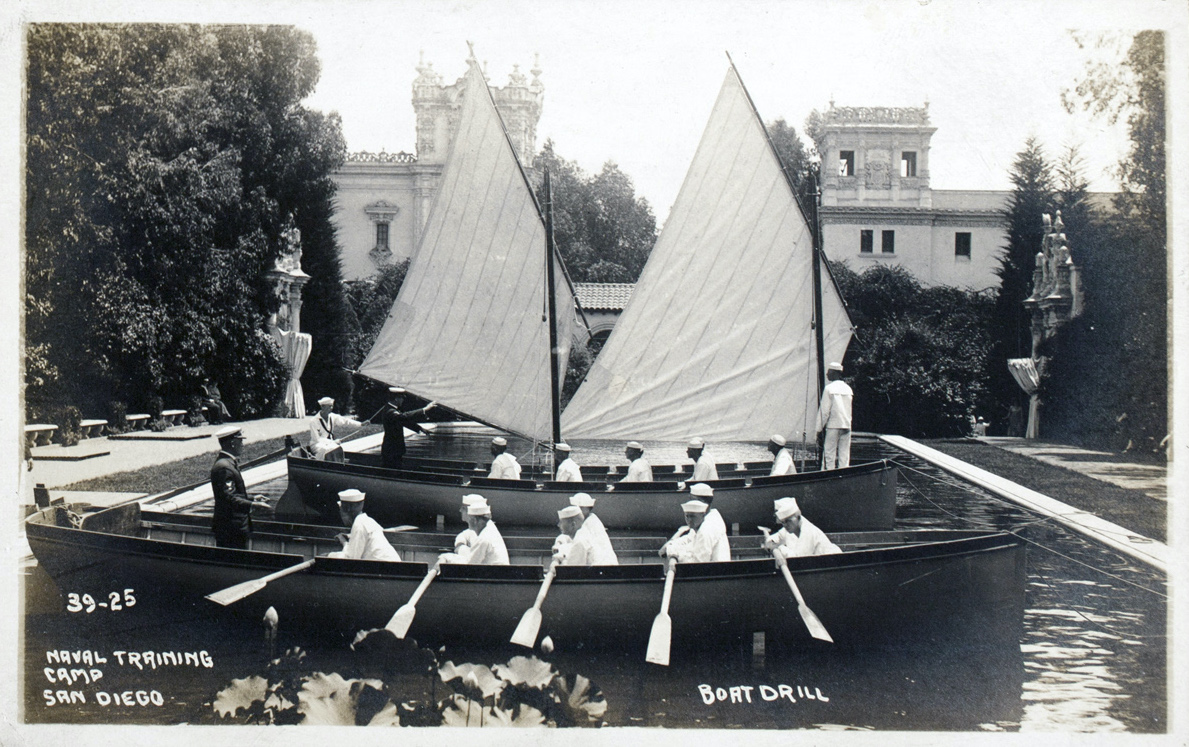
US Navy boat training in the reflecting pond, Balboa Park, 1917. Photo, Panama-California Exposition Digital Archive.
After the Exposition, the Shaws toured nationally, with Libby as the headliner, “Jonia.” It was the time of the great influenza pandemic. Her brother died of Typhoid Fever. Sadly, the rising star was stricken with pneumonia while on tour in Washington, DC, and died shortly thereafter at 20 years old.

This is a work in progress, and as such, information herein is subject to change. Do you have any further information, family stories, or photos about the Hawaiian Village in San Diego? Get in touch and leave a comment below. Mahalo!
 The first edition of Ninety Years of Classic San Diego Tiki sold out quickly. By popular demand, a new edition is in the works. Expanded with new information, photos, and memorabilia from San Diego’s Tiki restaurants and bars — ones missed from the past and others opened since 2018 — this full-color, 288-page hardcover edition is coming your way September 1, 2026.
Notes
Citation: Martin S. Lindsay. ‘The Hawaiian Village and Hula-Hula in San Diego.’ Classic San Diego: tasty bites from the history of America’s finest city. Web. < https://classicsandiego.com/2026/03/the-hawaiian-village-and-hula-hula-in-san-diego/ >
Shaw family photos are from the Winifred Shaw Matteson Collection, and © copyright by Winifred Shaw Matteson; family information is from Gregg Miner, “The James Shaw Family: A Hawaiian Musical Dynasty,” HarpGuitars.net, 2021; correspondence and telephone interviews with Winifred Shaw Matteson, 2026.
Hula Ku‘i, the traditional dance, with Western influences. Meaning “to join old and new,” it features verse-chorus structure, ‘ukulele / strings accompaniment, and often a vamp instrumental interlude between stanzas.
“soldier-of-fortune” is from San Diego newspaper accounts critical of Kenneth Croft’s support for Canadian soldiers during WWI. They made an example of the Englishman, who’s intentions were colored by his brother’s death in the war. He beat the wrap. He and his opera star wife co-managed the Hawaiian Village and the Cristobal Cafe concessions for the fair.
In 1911, Nona Malli debuted in London with a mean-girl review in Variety magazine. “Nona Malli who made her first appearance at the Alhambra last week arrived with a considerable reputation, but it has not been sustained. She is by no means unprepossessing; in fact, there is quite a certain charm about her appearance. She has a good voice, but it is of the concert brand, and not suited for vaudeville. She sang three American numbers, finishing with “Alexander’s Rag-Time Band,” but none got over. She needs coaching in delivery and style. She also lacks the ginger that is so essential to successful vaudeville endeavors…”
“was a busy man,” and “Irish Village,” are from Elizabeth Creely, “Shamrock Isle at the Panama Pacific International Exposition and the end of the Irish Village,” web: FoundSF:The San Francisco Digital History Archive, 2015. Croft came from an English aristocrat family, and his Irish Village concept at the San Francisco fair did not go over well with Irish-Americans. Likewise, some thought of his Hawaiian Villages as exploiting native Hawaiians. While under contract, the cast members were expected to live on the fairgrounds in the Villages.
“carved stone Tiki god” is from Croft’s descriptions provided in “Hawaiian Dancers will Feature Village,” San Diego Union (San Diego, CA), 13 Nov 1914, pg 7.
“new-and-improved 1916” The San Diego fair ran for two yearly seasons. The first, January 1 – December 31, 1915, was known as the Panama-California Exhibition. After somewhat disappointing attendance, it was retooled the next year as the 1916 Panama-California International Exhibition.
