The Catamaran Resort: A Vacationist’s Delight
By Martin S. Lindsay
This year, Tiki Oasis marks 25 years as the nation’s premier island-themed weekender and musical event! Over twenty have occurred annually here in San Diego since outgrowing humble beginnings at Tiki Caliente in Palm Springs. How many of these Tiki Oasis resorts have you been to?
Hanalei Hotel (Crowne Plaza) in Mission Valley, Vacation Village (Paradise Point) on Mission Bay, and Town & Country Resort in Mission Valley.
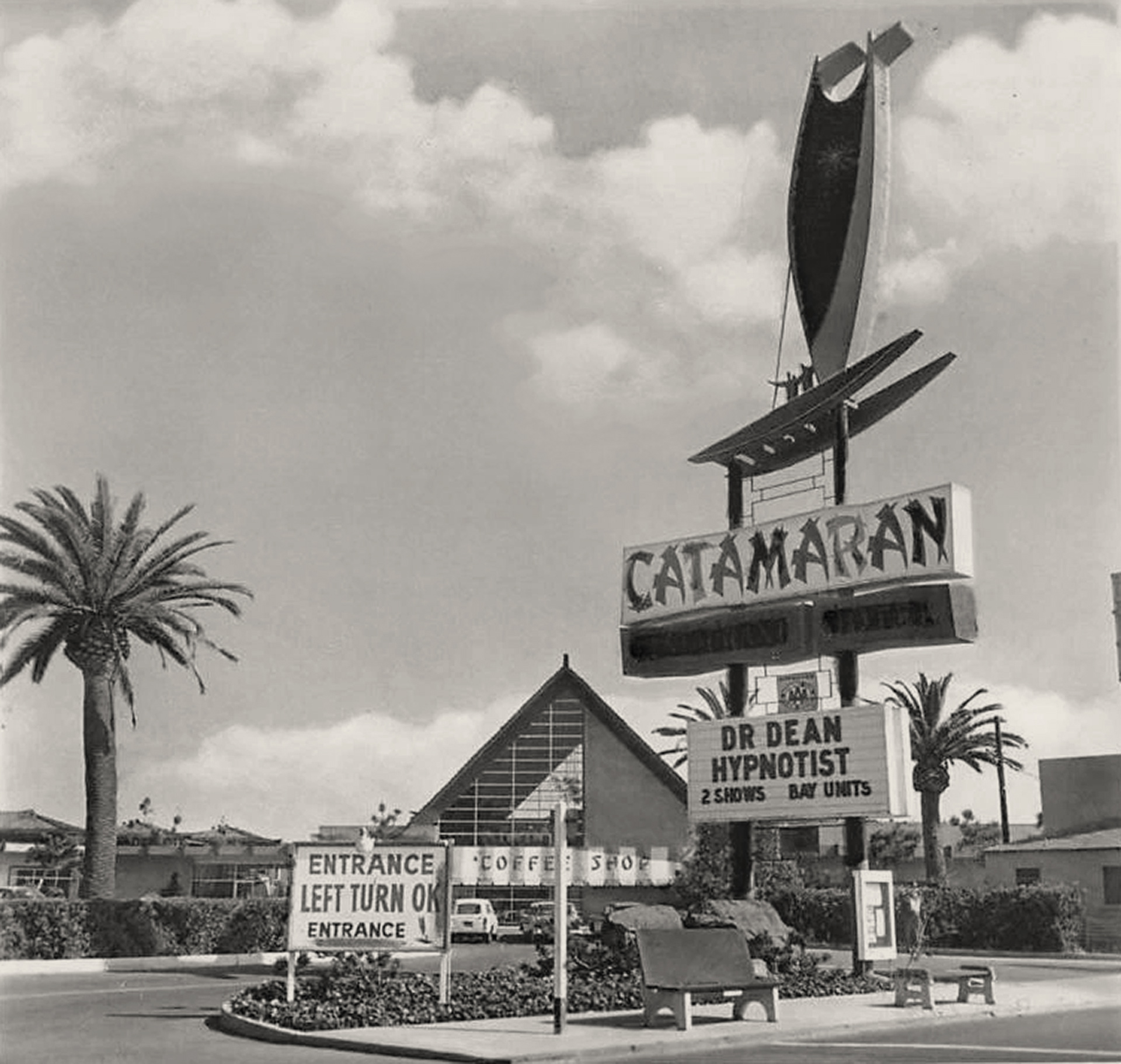
Another important venue for the mid-century vacationist is the Catamaran Resort Hotel & Spa, a classic Pacific Island-themed hotel on Mission Bay in San Diego, and home to the area’s longest-running annual summer luau.
In 1953, William and Anne Evans opened the Bahia Hotel on the banks of False Bay, which was being developed into a recreational aquatic park by the City of San Diego. Five years later, it was a financial success. Anne had initially scoffed at the idea of building a resort on the banks of “a smelly swamp,” but the gamble had paid off. So, in 1958, they acquired the right to develop land across the bay on its northwest beach.
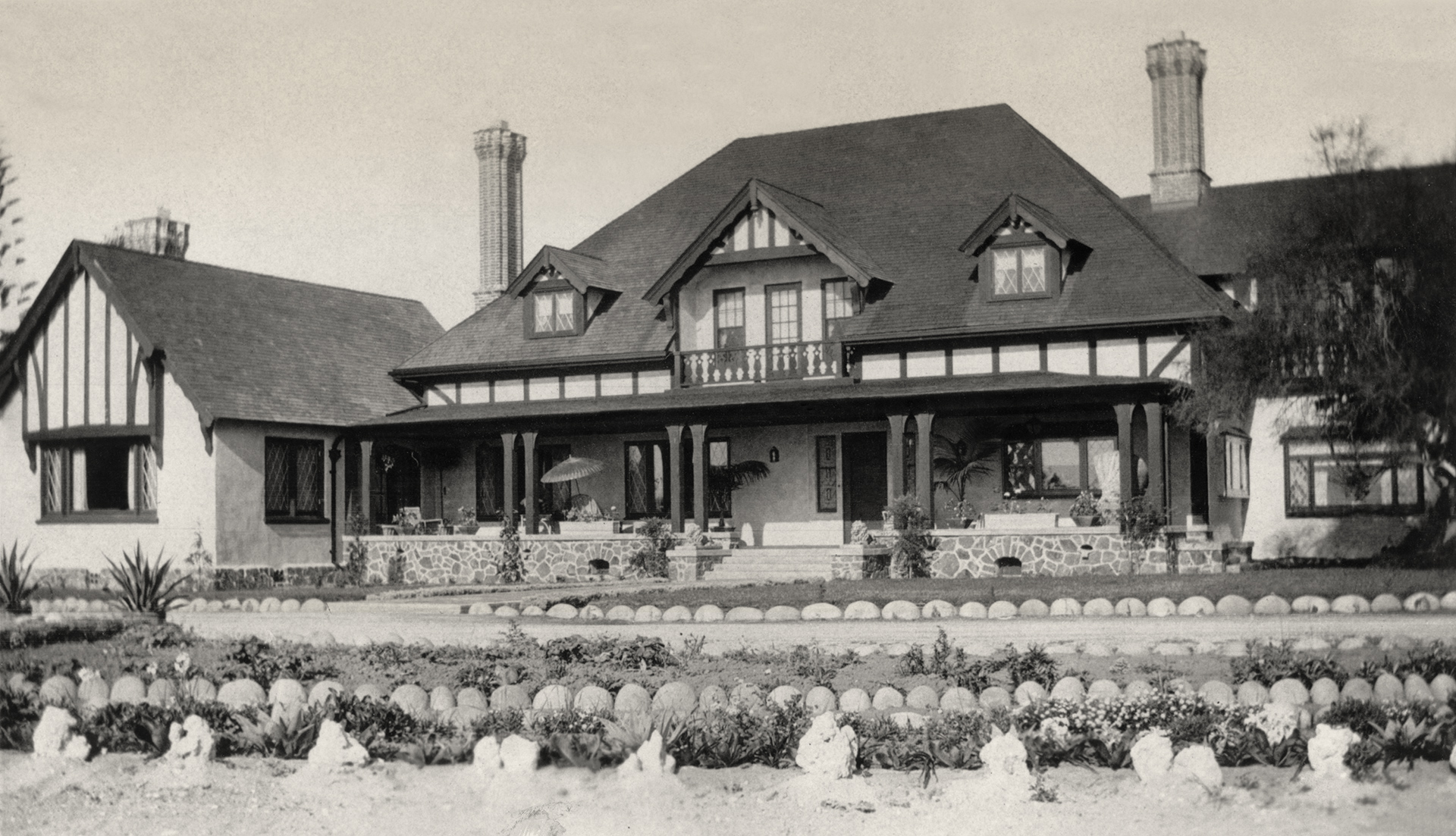
Braemar Manor, Scripps Residence, Pacific Beach. Photo, San Diego History Center.
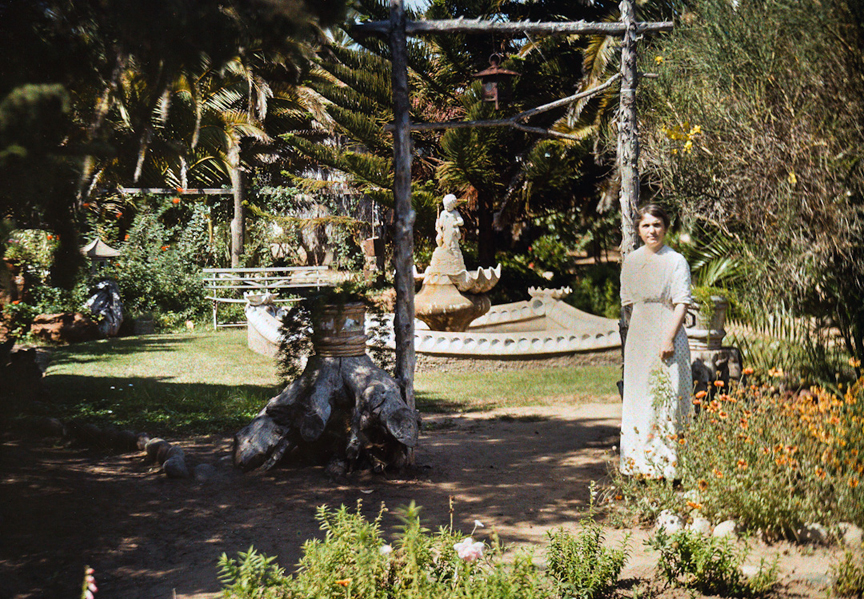
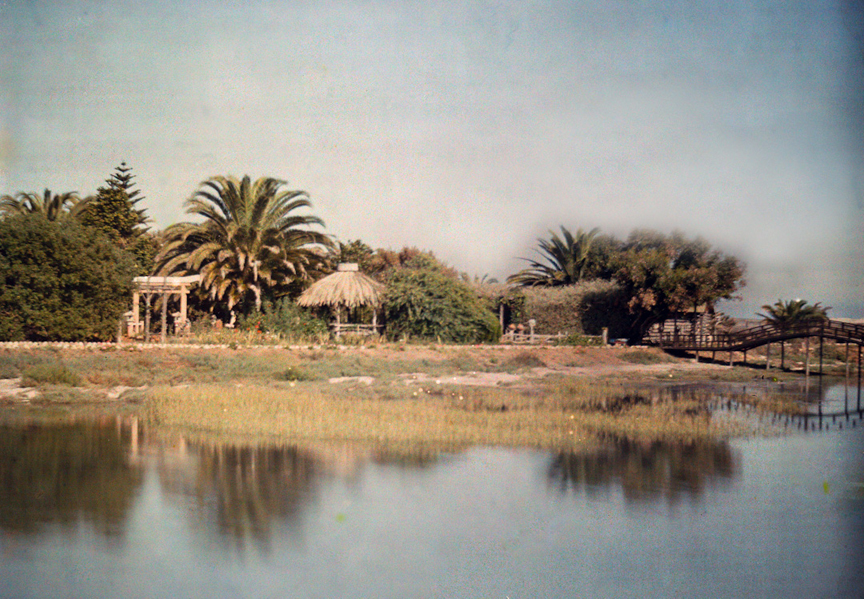
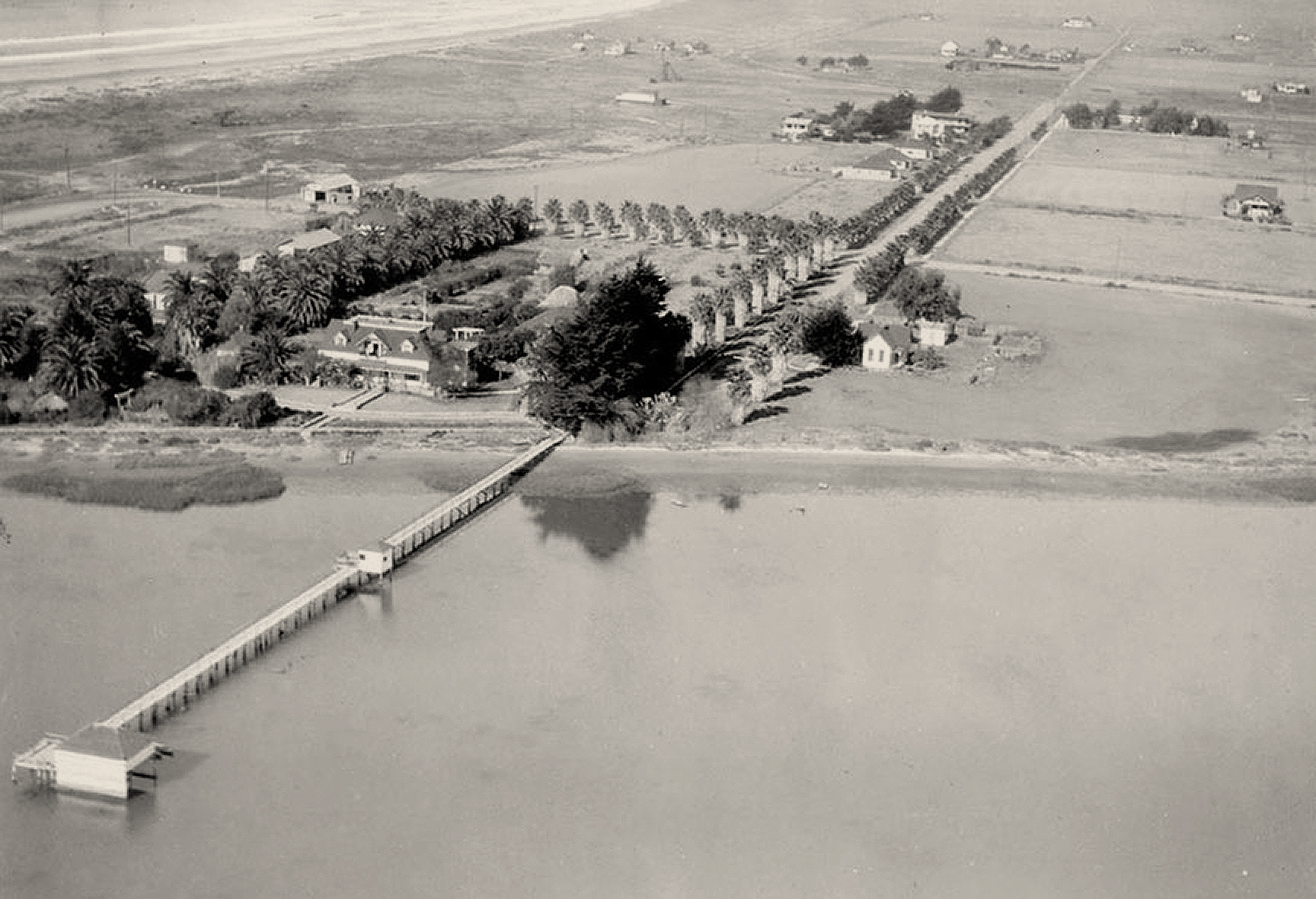
The Evans family built their new tropical resort — The Catamaran — on the grounds of the former Braemar Manor of San Diego’s influential Scripps family. Initially established by Fred and Emma Scripps in 1898 as a Stratford-on-Avon style manor with its own wharf, the seven-acre estate grew to be well-known for its Japanese teahouse, log cabin, and even a replica of the Mayflower on its private beach for the kids. Its gardens and walks hosted annual “garden fete” fundraisers for the neighboring ZLAC Rowing Club, America’s oldest women’s rowing club.
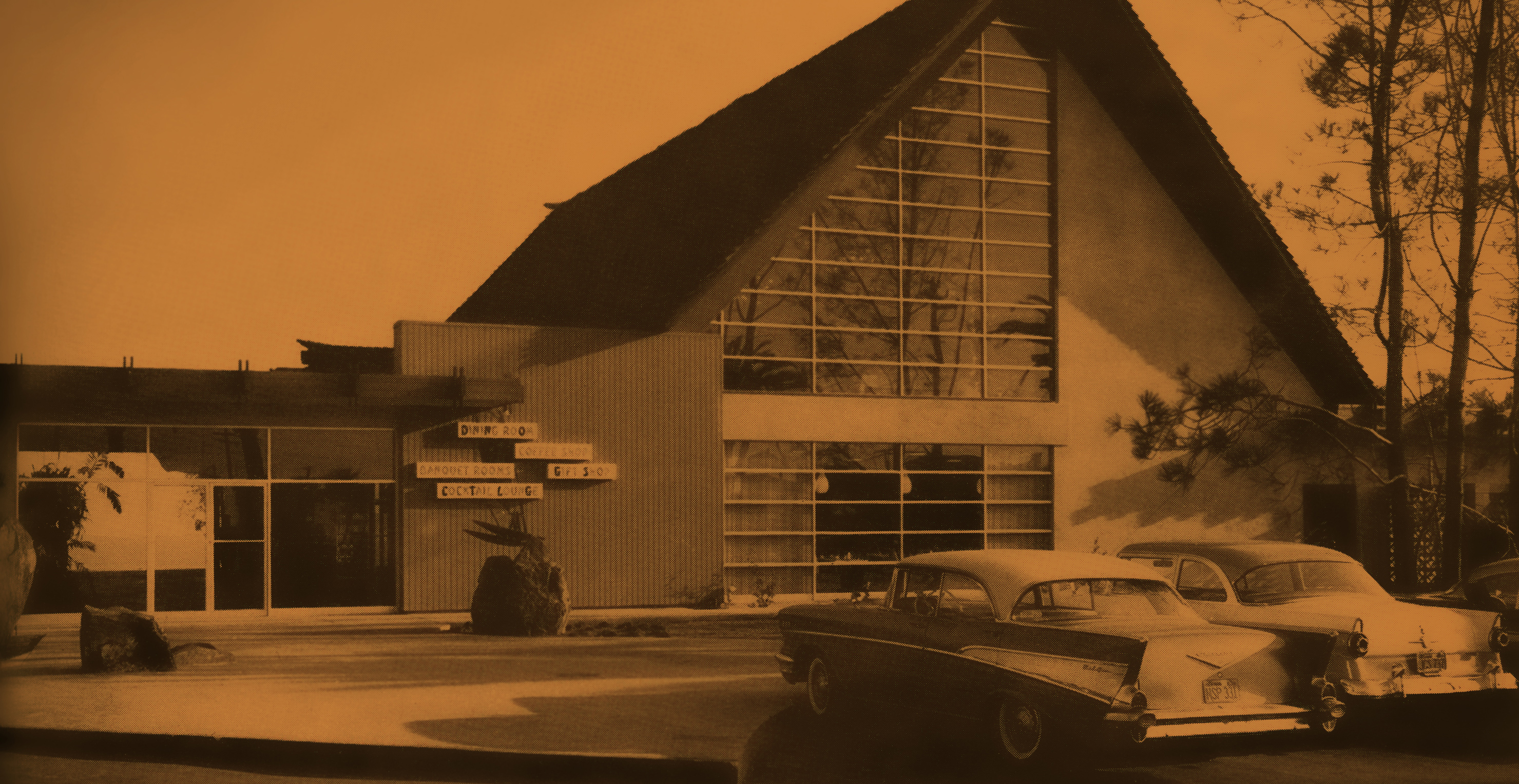
On the death of the Scripps, Pacific Beach real estate men Vernon Taylor and Clinton McKinnon bought the land. They joined with Bill Evans and John D Butler to form Braemar Development Corporation, leased the parcel and tidelands beach, and started the project. The aging Braemar Manor was razed for what newspapers described as an “oriental-styled modern hostelry” on the newly re-christened Mission Bay Aquatic Park. The modern resort was designed and built by Trepte Construction in a Colonial Hawaiian, or Tiki Modern, style to better fit in with the tropical grounds, which went from English country to Japanese-inspired. Structural engineering was by Alfred Burchett, and interiors by Gerald W. Jerome, AID.
Among its noteworthy projects, Gerry Jerome’s firm of young designers created interiors for Anthony’s Fish Grotto, Anthony’s Star of the Sea Room, Bahia Hotel, Islandia Hotel, and Colonel Salomon’s penthouse at 3200 Sixth Avenue. Jerome’s studio ran an almost “medieval-like apprentice system,” remembers Kimberly Mayer. “Gerry Jerome relished that. He had a larger-than-life persona, and oftentimes while we were under the gun, he made himself at home in our office, sitting back with a vodka and tonic, telling tales.”
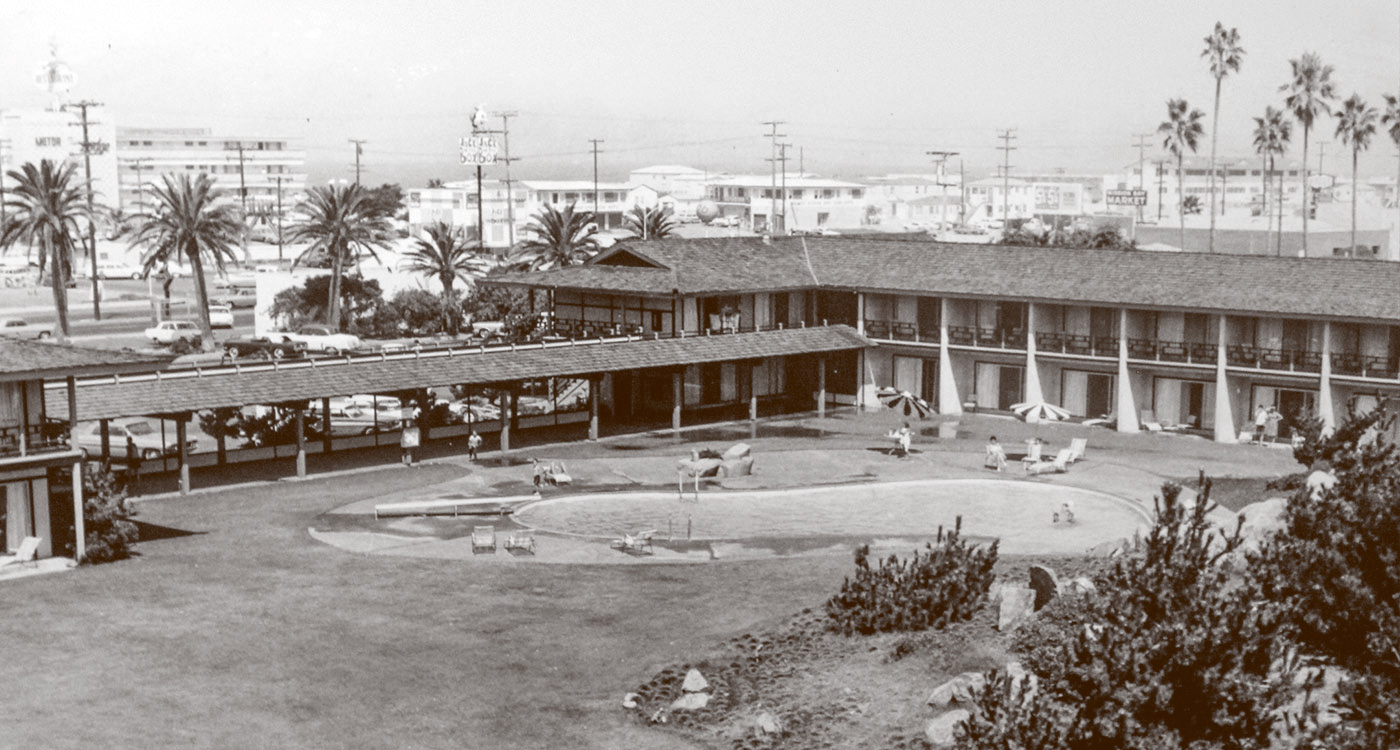
The Catamaran Resort Hotel opened in the summer of 1959 with 82 air-conditioned, king-sized rooms furnished by Barker Brothers, two pools (one fed by a “giant waterfall depicting a Hawaiian scene”), and a modern innovation for Southern California hotels — the first system to feature free dial-up phones in each room! Previously, guests were charged for local calls; now, you could dial up whomever. Long-distance calls could be made directly from your room. San Diego operators would note the call and report the charges to the hotel’s switchboard. A blinking light on the James Bond panel in your room meant there was a message for you at the front desk. Or control that piped-in music from one of three network channels! It was high technology at its finest.
The old Scripps estate’s dining hall became the Catamaran Wedding Chapel in 1962. It was moved close by and is now known as the Rose Creek Cottage wedding venue in Pacific Beach.
International cuisine was served in the exotic main dining room. What could be more fun than flaming sword entrees like shish kebab and crab brochette? And how about a stiff drink in the “most spectacular cocktail lounge in Southern California?” Yes, please.
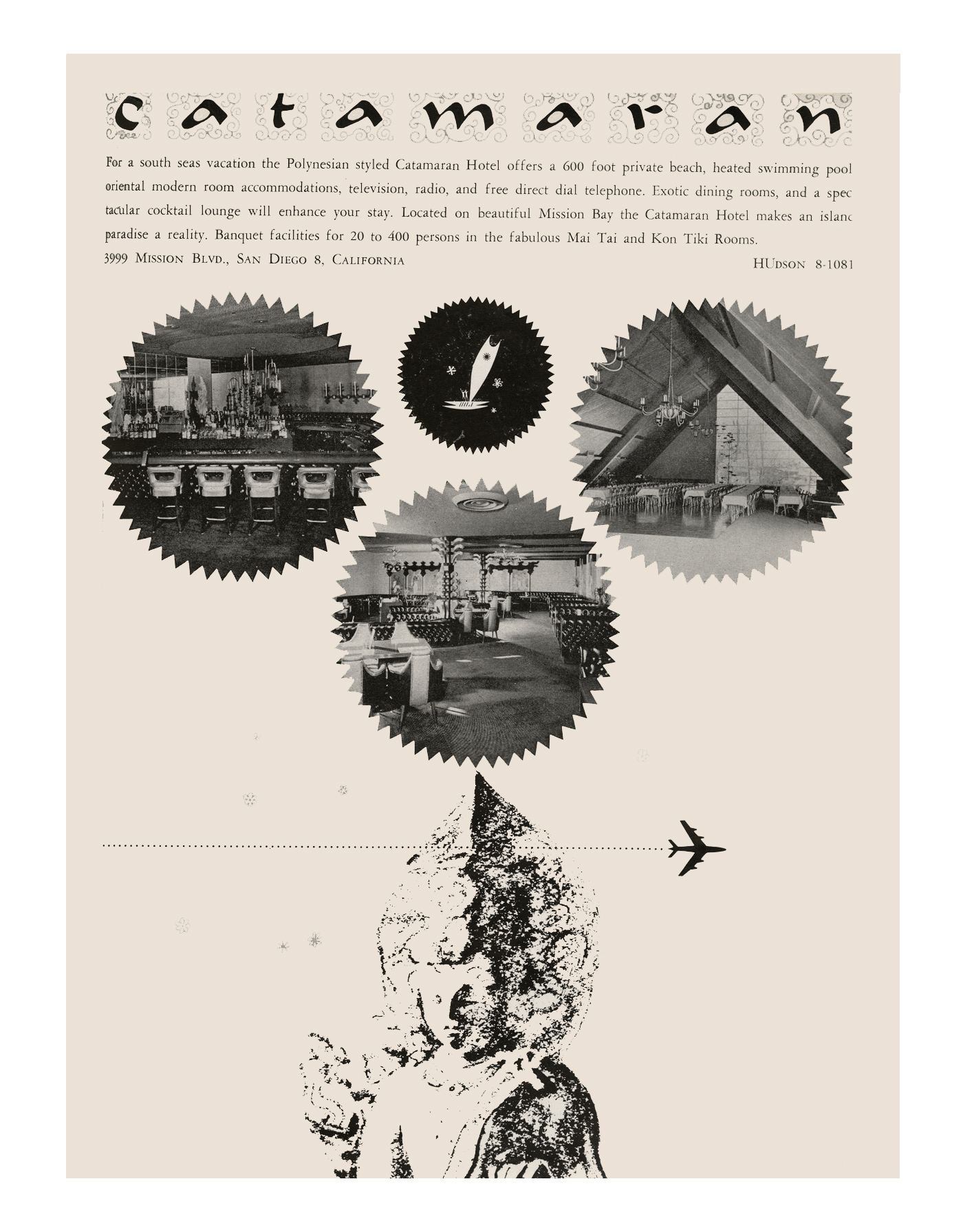
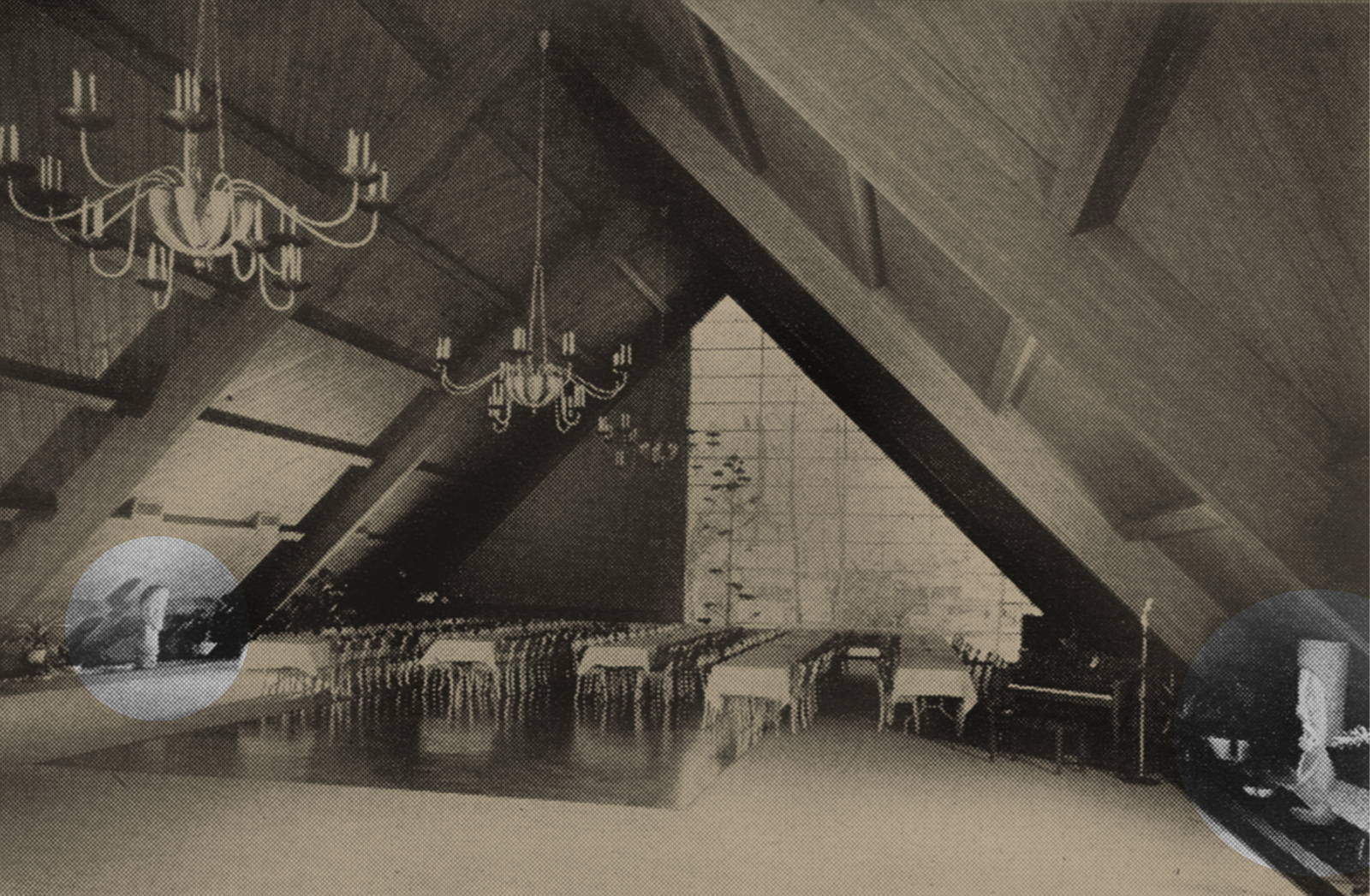
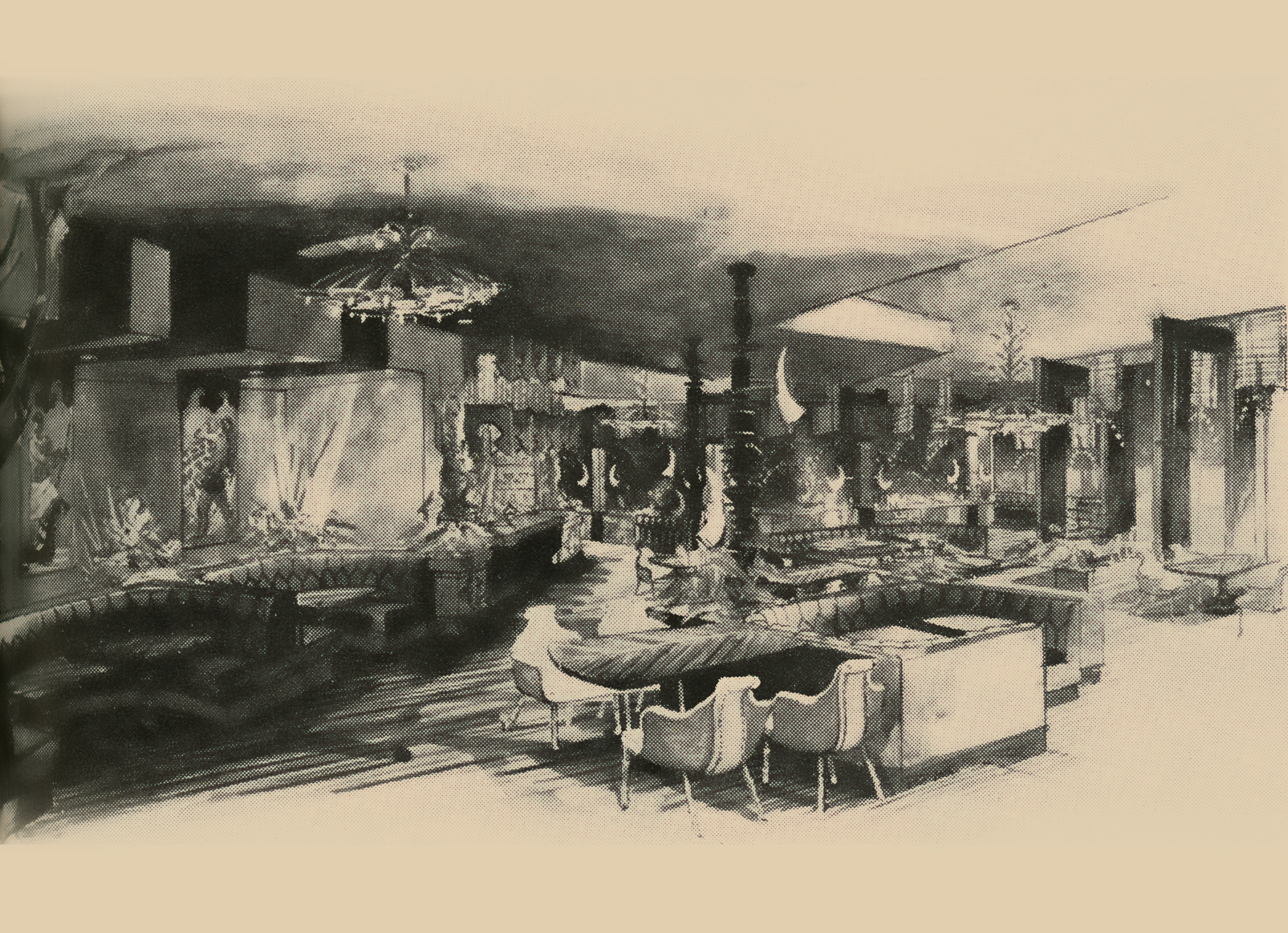
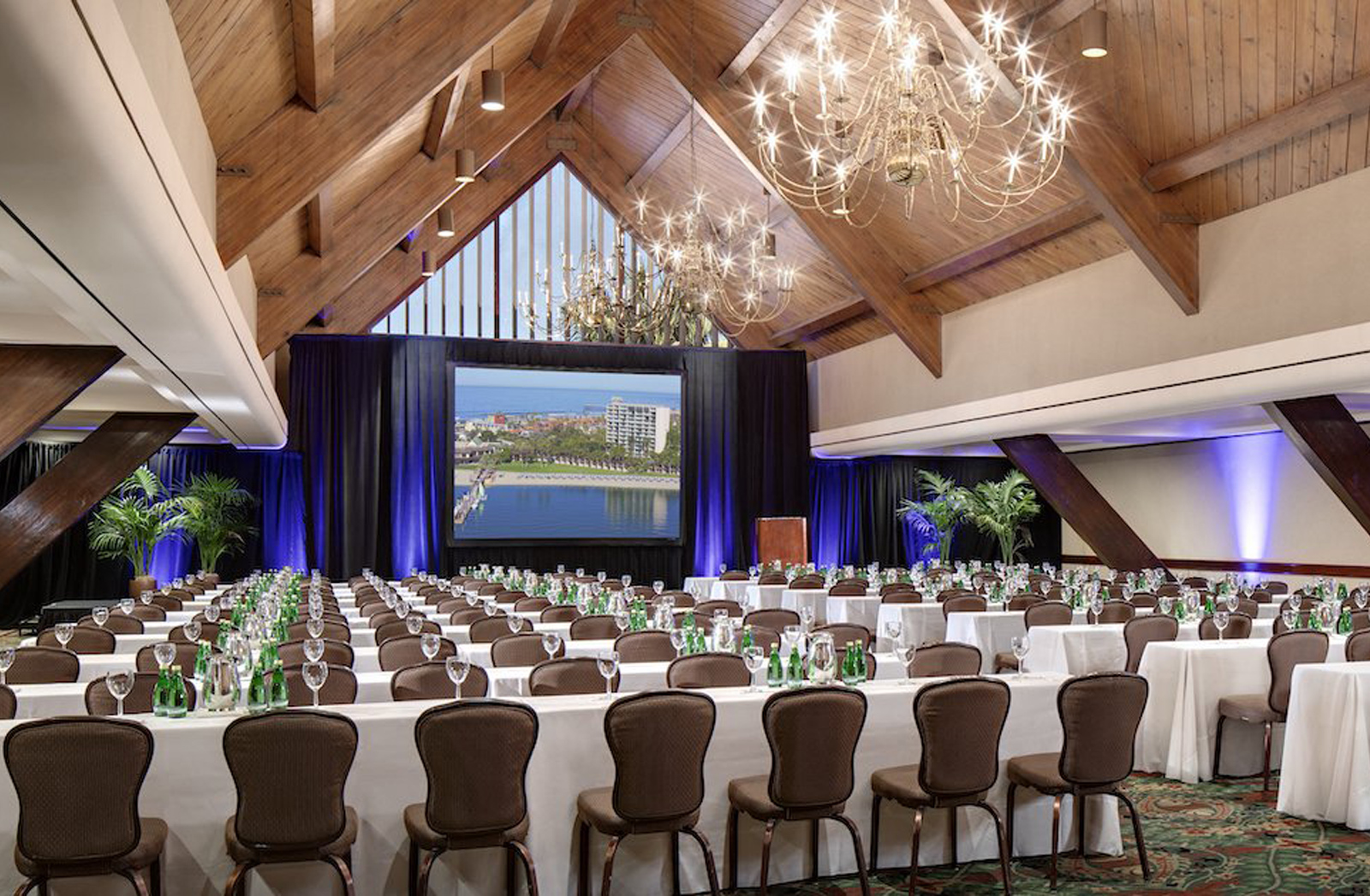
The resort featured the large Kon-Tiki banquet room and the smaller Mai Tai room, each with its own restaurant and private bar. The Kon-Tiki Room hosted many functions and group events, including the annual Hoo-Hoo-Ettes convention (ladies’ auxiliary club of the International Concatenated Order of Hoo-Hoo, a fraternal organization of the forest products industry).
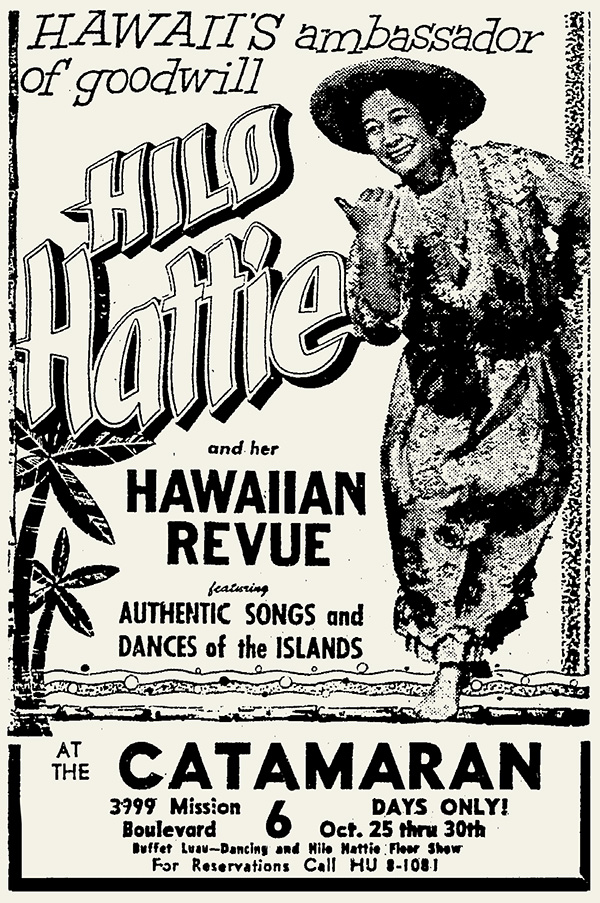
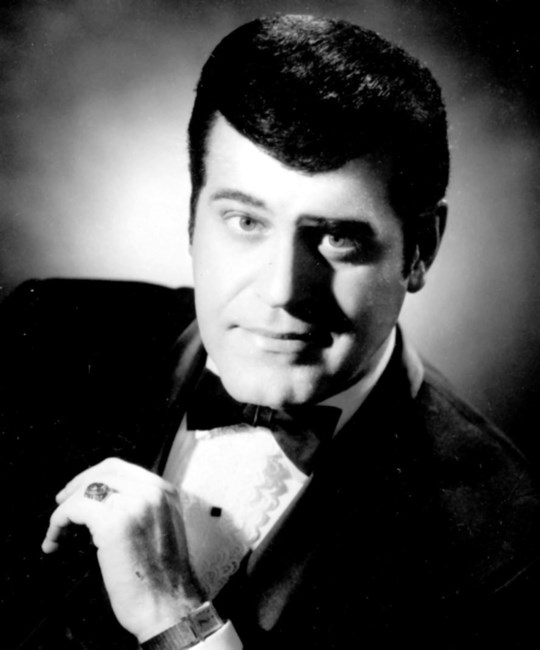
Some of the Catamaran’s first summer luaus were held around 1960. Hawaiian treasure and ambassador Hilo Hattie appeared there with her floor show! The Kon-Tiki Room eventually became the Cannibal Bar — considered a standby for years — offering a variety of dance music from classic rock to reggae. And who can forget suave San Diego hypnotist Dr. Michael Dean’s long-running show at the Cannibal Bar? “It was better than Cats…”
The Evans family imported traditional Pacific Island art to decorate the facility, including spears, personal jewelry, hand-woven rugs, and warrior shields from New Guinea. Take a stroll through the grounds and you’ll see totem poles throughout the lush property, handcrafted in Bali specifically for the Catamaran. A monumental Tapa cloth made of mulberry bark is proudly displayed above the black koa wood front desk. The tapa cloth is from the New Hebrides Islands, located off the coast of New Guinea. When it was commissioned, it was the largest created since 1920, and took many different island families over a year to make.
To make transportation between the Bahia and Catamaran hotels more convenient for guests, Evans Hotels purchased a 45-foot ferry. They reconstructed it as an authentic Mississippi-style sternwheeler, the Bahia Belle, in 1961. Expansion of the Catamaran began in 1968 with the construction of West Coast’s tallest load-bearing masonry building, a 13-story, 160-guestroom tower designed by J.V. Thompson & Associates. In 1986, Evans Hotels added a second sternwheeler to their fleet, the William D. Evans, a 99-foot ship with capacity for up to 600 passengers.
In the 1980s, and again in 2014, the resort was renovated and expanded to its current 311 rooms. The South Pacific-inspired Catamaran Spa opened with 10 treatment rooms, a relaxation lounge, steam room, sauna, men’s and women’s locker rooms, a whirlpool, and a fitness center that overlooks Mission Bay. Today, Catamaran dining is guided by Evans Hotel’s corporate culinary advisor, Jeff Jackson, at Oceana Coastal Kitchen, Moray’s Outdoor Lounge, and Lava Java coffee.
Luaus on the beach at the Catamaran are family-friendly events with Polynesian food, music, and dance. The Leiataua family’s local luau group, Pride of Polynesia, provides authentic song and dance for the luaus from four of the central Polynesian Islands — Tahiti, Hawaii, Samoa, and Aotearoa (New Zealand), featuring hula and fiery torch dancers.